
What Should Property Developers Look for in a Home Elevator Supplier?
Oct 22, 2026
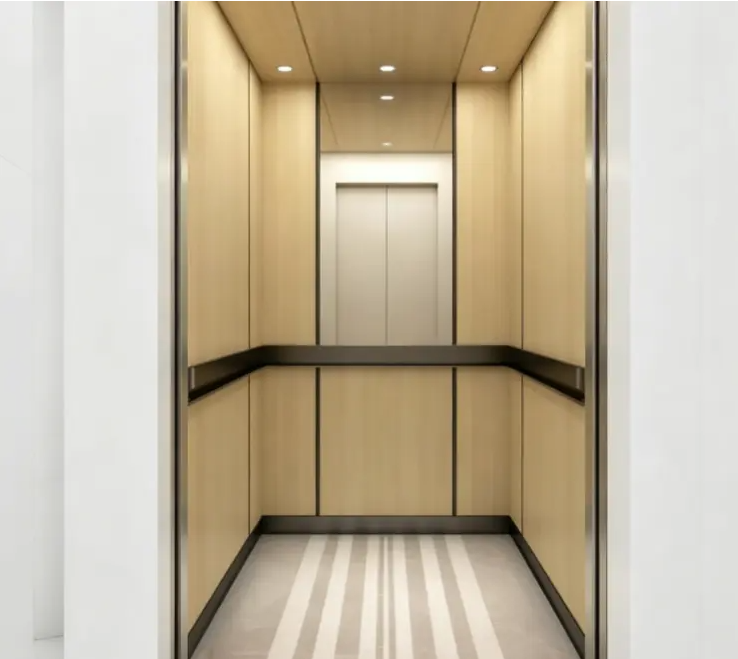
Ningbo, Zhejiang Oct 22, 2026 (Issuewire.com) - Property developers should look for a home elevator supplier that can prove three things: code compliance, delivery reliability, and long-term support. For residential projects, the right partner is not only selling a lift; they are coordinating shaft dimensions, load rating, ride quality, finishes, installation planning, spare parts, and maintenance strategy. A strong supplier should be able to support project-specific customization, provide clear documentation for safety and certification, and respond quickly when schedules change. For developers, the best choice usually reduces coordination risk, protects design intent, and helps avoid costly rework during construction or handover.
- Choose a residential elevator supplier with documented compliance, not just a product brochure.
- Check whether the supplier can handle customization, spare parts, and after-sales support as one workflow.
- Ask for exact technical data: capacity, speed, pit depth, overhead, and power requirements before design freeze.
- For developer-led projects, delivery certainty and installation coordination matter as much as aesthetics.
When evaluating a home elevator supplier, property developers should start with measurable requirements, not style photos. Residential elevator systems often use rated loads such as 320 kg, 400 kg, or 630 kg, and developers need to match those figures to the building layout, user profile, and local code requirements. Safety and conformity should be checked against recognized references such as ISO 8100-1:2019 and ISO 8100-2:2019, while performance expectations should also consider the installation environment, travel height, and maintenance access. For broader project planning, a capable residential elevator supplier should be able to coordinate with the developer's architect and MEP team, not just quote a unit price.
Why the right home elevator supplier matters for property developers
The right supplier reduces project risk across design, procurement, installation, and handover.
For developers, a home elevator is rarely a standalone purchase. It affects core architecture, structural openings, electrical design, interior finishes, and after-sales service planning. If the supplier cannot provide dimensional clarity early, the project can face shaft conflicts, ceiling-height issues, or late-stage redesigns. That is why many developers treat the supplier as part of the delivery team, not as a simple vendor.
In residential projects, schedule discipline is critical because elevator installation usually sits on the project critical path. If the elevator arrives late, finishing trades may be delayed; if the shaft dimensions are wrong, civil work may need to be reopened. A supplier that understands developer workflows can help reduce these risks by confirming pit depth, overhead clearance, machine-room or machine-room-less requirements, and power interface needs before fabrication starts.
Developers should also consider lifecycle value. A well-chosen residential elevator supplier can improve resale appeal, lower callback frequency, and reduce long-term service friction. In premium housing, the lift is not only a transport device; it is part of the property's perceived quality. That makes documentation, reliability, and finish consistency commercially important.
Developer Priority What to Verify Why It Matters Typical Technical Reference
Safety Conformity documents, emergency features, door protection Reduces liability and handover objections ISO 8100-1 / ISO 8100-2
Space fit Pit, overhead, shaft size, entry layout Avoids redesign and civil rework Project-specific drawings
Load and ride quality Rated load, starting comfort, leveling accuracy Improves user experience and usability 320-630 kg common residential range
Support Spare parts, service response, maintenance plan Protects long-term asset value Developer service agreement
What a property developer elevator supplier must prove before award
A property developer elevator supplier should prove capability with documents, drawings, and delivery history.
Before award, developers should request a technical package, not just a commercial proposal. That package should include capacity, speed, travel height limit, door configuration, control system type, energy data, and installation prerequisites. Residential elevators often operate at moderate speeds, but even a compact unit can create major coordination problems if the shaft geometry is not confirmed. A supplier that responds with exact drawings and interface data is usually easier to manage during construction.
Certification is another non-negotiable checkpoint. Depending on the destination market, developers may need CE-related conformity, TÜV-supported documentation, or local code alignment. Internationally, the developer should at least require a clear explanation of which standard the product is designed around and what third-party evidence exists. For components and installation quality, standards such as ISO 22559-1:2014 are useful as a framework for safety and accessibility expectations. For machine and installation tolerances, ISO 12100 is not elevator-specific but remains relevant as a risk-assessment reference across machinery projects, while NIST provides metrology and measurement resources that reinforce the importance of dimensional verification during engineering handoff.
Developers should also look for evidence of project execution capability. That includes sample export packing standards, part-number discipline, lead-time estimates, and a service process for missing or damaged components. A supplier who can document how replacement parts are labeled, shipped, and tracked is less likely to create downtime later.
Document Request Minimum Expected Detail Developer Use Red Flag if Missing
General arrangement drawing Shaft, pit, overhead, door opening dimensions Architectural coordination Cannot freeze structure
Electrical data sheet Voltage, phase, peak load, control interface MEP planning Hidden utility conflict
Certification file Standard basis, test scope, issuing body Compliance review Unclear market access
Spare parts list Part codes, minimum stock, lead times Lifecycle planning Long outage risk
How to compare home elevator supplier options on technical fit
Technical fit is the fastest way to separate serious suppliers from sales-driven ones.
Developers should compare suppliers on four technical questions: can the elevator fit the building, can it serve the intended user, can it comply with the destination market, and can it be maintained without special friction. A beautiful cabin means little if the shaft is too shallow or the opening sequence conflicts with structural beams. For this reason, the supplier should be willing to review architectural drawings early and flag constraints before contract signature.
Capacity is usually the first numeric filter. A typical residential elevator may be specified at 320 kg for one or two users, 400 kg for standard family use, or 630 kg for larger cabins and accessibility-oriented layouts. Speed is usually modest in homes compared with commercial buildings, but developers should still request the exact value because it influences ride comfort and travel time. In many residential scenarios, the key is not maximum speed but stable leveling and smooth start-stop behavior.
Space requirements are equally important. Machine-room-less designs can help preserve usable area, but they still require correct overhead, pit depth, and maintenance access. Developers should not assume that a compact external footprint means zero structural complexity. The supplier must provide a dimensioned layout for the exact configuration being offered.
Residential Use Case Common Rated Load Practical Benefit Planning Note
Single-family villa 320 kg Compact footprint Best for limited occupancy
Family residence 400 kg More flexible cabin space Good balance of size and cost
High-end residence 630 kg Improved accessibility Useful for premium finishes
Accessibility-focused home 400-630 kg Easier mobility support Check local accessibility rules
What residential elevator suppliers should offer beyond the product
The best residential elevator supplier sells delivery certainty, not only hardware.
Property developers should evaluate whether the supplier can support the whole project lifecycle. This includes pre-sales design consultation, manufacturing coordination, export packaging, shipping documents, installation guidance, commissioning support, and after-sales spare parts. If any one of those steps is weak, the developer may inherit schedule delays and service issues after handover.
Customization is particularly important in premium housing. Developers may need cabin finishes that match interior palettes, door styles that fit architectural language, or control panels that align with a minimalist design concept. A supplier with flexible modification ability can save the design team from compromising on visual consistency. In this context, the supplier should be able to adapt without losing technical discipline.
For long-term asset management, spare parts support matters as much as aesthetics. A developer who turns over multiple residential projects needs confidence that common wear parts, control components, and door hardware can be supplied later. This is where a company positioned as a full-solution partner has an advantage over a one-off reseller.
- Pre-award technical review with architect and MEP teams
- Dimensional confirmation before fabrication
- Finish and cabin customization for the building concept
- Installation guidance and commissioning support
- Spare parts planning and maintenance documentation
How to judge installation and handover risk before signing
Installation risk is often visible before the contract is signed if the developer asks the right questions.
A reliable home elevator supplier should explain how installation will proceed from shaft readiness to final commissioning. Developers should ask who provides site inspection, what civil tolerances are required, how the packing list is organized, and what happens if the site is not ready on the scheduled date. These questions expose whether the supplier understands real project pressure or only standard catalog sales.
Handover quality should also be measured. The developer should request a commissioning checklist that covers door operation, leveling performance, emergency functions, alarm systems, and user instruction materials. When the supplier can document a clear acceptance process, the developer gains better control over punch-list closure.
In many projects, a practical reference point is not the elevator itself but the coordination burden it creates. If the supplier provides clear installation drawings, labeled components, and a predictable service response, the developer can reduce delay exposure. That is especially valuable in projects with multiple units or staggered handover phases.
- Request dimensioned drawings before structural lock-in.
- Confirm rated load, speed, and electrical requirements in writing.
- Ask for a commissioning and acceptance checklist.
- Verify spare parts availability and lead time.
- Review the supplier's response process for site changes.
Why modernization expertise matters even for new home projects
Modernization expertise is a strong signal of a supplier's long-term engineering depth.
Even when a developer is buying for a new residence, the supplier's modernization capability reveals whether it understands lifecycle engineering. A company that can upgrade old lifts, extend service life by 10-15 years, and replace systems at about one-third of replacement cost, according to the site's stated value proposition, usually has stronger knowledge of components, maintenance bottlenecks, and retrofit constraints. That experience often translates into better problem-solving in new builds as well.
For developers, this matters because home elevators are increasingly judged as assets rather than appliances. Buyers and property managers want systems that can be maintained, updated, and supported over time. If the supplier also handles modernization, it suggests familiarity with both legacy interfaces and future service needs.
That said, developers should still request market-specific proof. Modernization experience is helpful, but it should be backed by documented project references, upgrade scope descriptions, and part compatibility data. The ideal partner can explain where retrofit lessons influenced the design of current residential systems.
Capability Area What It Indicates Developer Value
Modernization projects Retrofit engineering depth Better lifecycle support
Spare parts supply Service continuity Lower downtime risk
Custom finishes Design sensitivity Stronger market appeal
Fast response process Operational discipline Reduced project friction
Practical supplier selection checklist for property developers
A disciplined checklist helps developers avoid choosing on price alone.
When comparing a home elevator supplier, developers should use a weighted evaluation rather than a simple quotation comparison. Price matters, but it should sit alongside compliance, engineering support, documentation quality, lead time, spare parts, and finish customization. A lower bid can become expensive if it creates rework, delays, or weak service support.
A useful method is to score each supplier on the same questions. Ask whether they can provide standard-based documentation, whether they can adapt the elevator to the project's architectural language, whether they can ship to the project region reliably, and whether they can maintain response speed after installation. These questions reveal whether the supplier is prepared for developer-grade procurement.
For overseas projects, communication quality is another hidden variable. A supplier that responds quickly and clearly to technical revisions can save days or weeks during submittal review. That is why direct modification ability and concise engineering communication are commercial advantages, not just service features.
- Can the supplier provide exact drawings within the design schedule?
- Can the supplier explain the compliance basis in writing?
- Can the supplier supply spare parts after handover?
- Can the supplier customize finishes without delaying engineering?
- Can the supplier support installation issues remotely and quickly?
When a developer should choose a full-solution residential elevator supplier
A full-solution supplier is often the safer choice for complex or high-value residential projects.
Developers should prefer a full-solution partner when the project involves customized architecture, cross-border delivery, multiple stakeholders, or a demanding handover timeline. In those situations, the supplier must manage more than hardware. It must coordinate drawings, shipping, installation logic, and long-term support. A fragmented supply chain increases the chance of miscommunication.
This is especially relevant for luxury homes, villas, and mixed-use residential developments where the elevator is part of the sales story. Buyers expect the lift to look integrated, run smoothly, and remain maintainable. A supplier that understands this balance between technical delivery and visual integration is more likely to support the developer's business case.
Developers also benefit from a partner that can cover multiple product categories, not just home lifts. If the same company also supplies passenger elevators, freight elevators, escalators and moving walks, and modernization solutions, it is often easier to standardize procurement and service relationships across a portfolio.
FAQ: home elevator supplier selection for property developersWhat is the most important factor when choosing a home elevator supplier?
The most important factor is proof of compliance and engineering fit. A developer should confirm the supplier can meet the project's safety, dimensional, and service requirements before comparing finishes or price.
How early should a developer involve the elevator supplier?
The supplier should be involved as early as schematic design or design development. Early involvement reduces shaft conflicts, structural rework, and late-stage specification changes.
What documents should a property developer request first?
The first documents should be the general arrangement drawing, electrical data sheet, certification basis, and spare parts list. These four items usually reveal whether the supplier is technically prepared.
What residential capacity is common for home elevators?
Common residential rated loads include 320 kg, 400 kg, and 630 kg. The right option depends on user count, accessibility needs, and available shaft space.
Should developers prioritize machine-room-less designs?
Not automatically. Machine-room-less designs can save space, but the real decision should be based on pit depth, overhead clearance, maintenance access, and local code requirements.
How can developers reduce post-handover service problems?
Developers can reduce service problems by choosing a supplier with spare parts support, clear commissioning procedures, and documented installation guidance. A structured handover process matters as much as the equipment itself.
Why does modernization experience matter for a residential elevator supplier?
Modernization experience suggests the supplier understands lifecycle engineering, component compatibility, and maintenance constraints. That often leads to better long-term support for new residential projects as well.
In summary, property developers should choose a residential elevator supplier that can demonstrate compliance, dimensional accuracy, customization capacity, and dependable after-sales support. The best supplier is the one that reduces project uncertainty at every stage, from early design to long-term service.
Media Contact
Tengdian Elevator Technology (Shanghai) Co., Ltd.
Source :Tengdian Elevator Technology (Shanghai) Co., Ltd.
This article was originally published by IssueWire. Read the original article here.
More News












YOUR NEWS, OUR NETWORK.
Do you have Great News you want to tell the world?
Be it updates about your business or your community, you can make sure that it’s heard by submitting your story to our network reaching hundreds of news sites across 6 verticals.