
Top 5 Selection Criteria for Choosing a China PCB Mount Fuse Holder Manufacturer
Oct 22, 2026
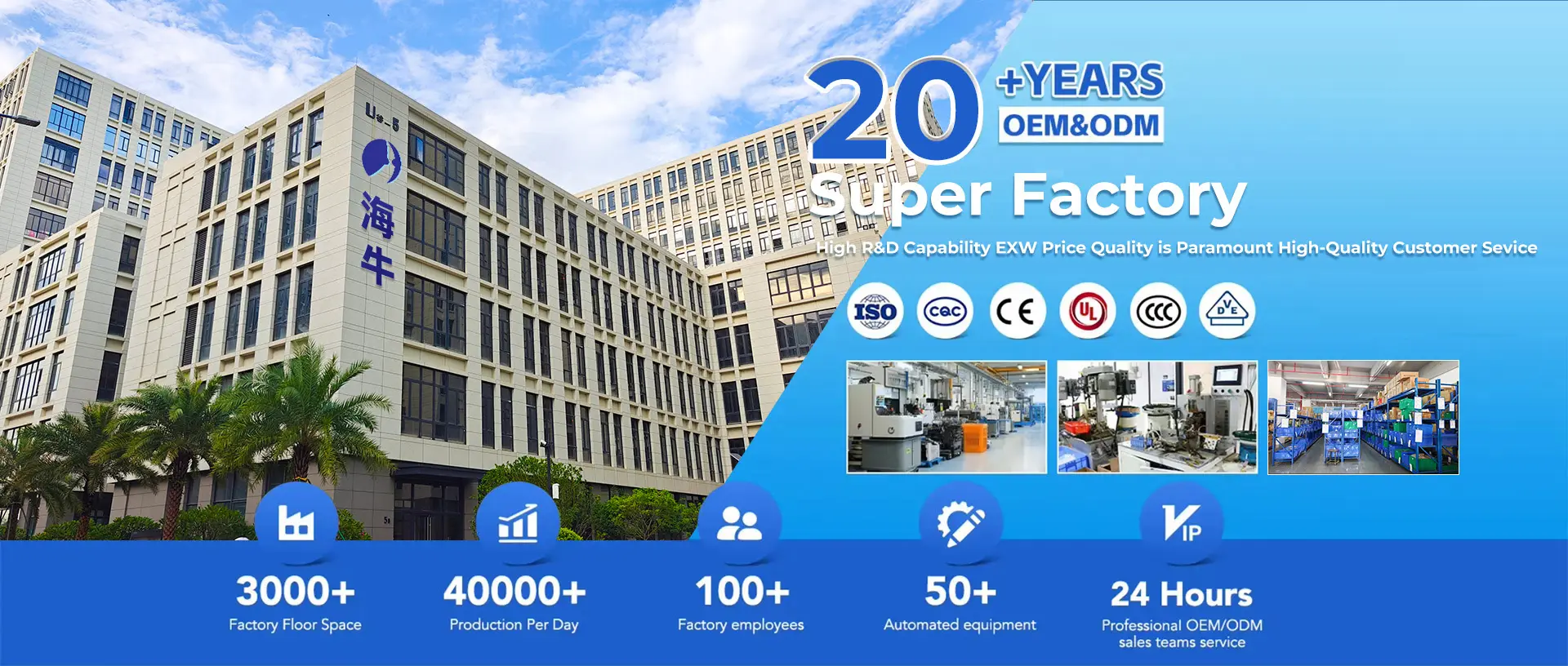
Huizhou, Guangdong Oct 22, 2026 (Issuewire.com) - As global electronic manufacturing expands across industrial automation, consumer electronics, renewable energy power systems, and automotive technologies, the requirement for reliable circuit protection components remains paramount. Printed Circuit Board (PCB) mount fuse holders play an essential role in modern circuit design by securing protective fuses directly onto board assemblies, shielding delicate semiconductors, integrated circuits, and downstream sub-assemblies from overcurrent and short-circuit damage. When sourcing these critical components globally, evaluating a China PCB Mount Fuse Holder Manufacturer requires a structured engineering and procurement approach that extends far beyond simple unit pricing. While the search term focuses on product category and regional sourcing, the decision framework must balance technical specifications, material compliance, production scale, quality control standards, and long-term supply chain stability. Founded in 2000, Huizhou Hainiu Electric Co., Ltd. operates a 2,000-square-meter manufacturing facility supported by 186 skilled personnel and mature production infrastructure dedicated to circuit protection devices for over two decades. Their specialized product range--including the H3 series PCB mount fuse holders rated for 250V and 10A with 5x20mm fuse compatibility, flame-retardant PBT/PA66 housings, and high insulation resistance--is widely deployed across power supply units, industrial testing devices, household appliances, and automotive control modules worldwide. To assist engineering teams and global sourcing managers in making informed decisions, five key criteria provide a comprehensive framework for selecting a manufacturing partner capable of delivering consistent quality and long-term operational safety.
Evolving Industry Trends and Sourcing Dynamics
The global circuit protection market is undergoing notable evolution, driven by the rapid expansion of smart home infrastructure, electric vehicles, renewable energy inverters, and automated industrial machinery. Modern PCB architectures require compact fuse holders capable of enduring elevated operating temperatures, continuous structural vibration, and higher electrical surge thresholds without undergoing mechanical warping or dielectric breakdown.
At the same time, international supply chain management increasingly emphasizes risk reduction, transparent quality tracking, and predictable delivery schedules. Sourcing component hardware from specialized manufacturing clusters in China offers substantial advantages in production scalability, tooling flexibility, and cost efficiency. However, identifying an ideal production partner requires analyzing operational depth beyond surface-level quotes. A thorough audit of raw material standards, internal quality control systems, international certification portfolios, and long-term manufacturing capacity ensures that board-level failures and unexpected production downtime are effectively avoided.
1. High-Grade Dielectric Materials and Thermal Stability
The primary criterion when evaluating a circuit protection supplier involves scrutinizing raw material quality and thermal resistance. PCB mount fuse holders house safety components specifically engineered to interrupt excessive electrical currents. Consequently, the holder body must preserve structural stability and electrical isolation even under substantial thermal loads.
High-grade fuse holders incorporate flame-retardant engineering thermoplastics, such as Polybutylene Terephthalate (PBT) or Polyamide 66 (PA66), frequently reinforced with glass fiber additives. These resin formulations should meet a UL 94 V-0 flame rating, ensuring that any combustion self-extinguishes rapidly in the event of localized heating or arc discharge. Standard resins risk softening or tracking under elevated temperatures, which can result in short circuits between adjacent circuit board traces.
Metallic contacts and terminal pins govern current transfer and thermal dissipation. Quality suppliers select high-conductivity brass or phosphor bronze alloys finished with uniform tin or silver plating. Proper plating thickness prevents surface oxidation during storage, maintains minimal contact resistance, and provides consistent solderability during automated wave-soldering or reflow assembly. Reviewing a manufacturer's incoming quality control protocols for raw metals and polymers offers clear insight into final component reliability.
2. Electrical Parameter Accuracy and Structural Compatibility
Printed circuit board space is increasingly constrained in contemporary hardware engineering. As a result, fuse holders must adhere to strict dimensional tolerances while matching required electrical parameters. A misaligned mounting pin or irregular housing footprint can disrupt automated placement machinery and create mechanical stress across solder joints.
Housing Insulation: PBT or PA66 thermoplastic rated to UL 94 V-0 flame standards to prevent thermal hazards.
Terminal Construction: High-purity brass or copper alloy with tin plating for minimal electrical resistance.
Dielectric Breakdown Resistance: Tested to withstand at least 1500V AC to 2500V AC for one minute without breakdown.
Insulation Resistance: Exceeding 100M under 500V DC test conditions to guarantee galvanic isolation.
Pin Pitch Tolerance: Maintained within narrow limits to facilitate smooth through-hole insertion.
A capable manufacturer maintains diverse product lines configured for varying electrical loads. For instance, standard PCB fuse holders tailored for 5x20mm tubular cartridge fuses typically handle ratings up to 10A at 250V AC, as demonstrated in the H3 series. Sourcing partners should supply certified current-derating curves, enabling circuit designers to verify performance across varying ambient thermal environments. Furthermore, availability of distinct cap styles--such as bayonet twist caps, screw caps, or open snap-in clips--allows design teams to tailor accessibility and shock resistance to specific enclosure constraints.
3. Comprehensive Quality Systems and International Safety Certifications
Circuit protection devices function as critical safety barriers in mains-powered and industrial electronics, making regulatory compliance non-negotiable. Selecting a supplier with verifiable third-party safety credentials protects original equipment manufacturers from regulatory delays and field recall risks.
Products intended for international markets must conform to recognized safety codes, including UL 4248-1 standards for fuseholders, CQC certifications for regional distribution, and relevant IEC/VDE directives for European markets. Furthermore, full compliance with RoHS (Restriction of Hazardous Substances) and REACH environmental regulations ensures that housing plastics, metallic contacts, and surface treatments contain no toxic heavy substances.
In addition to external certificates, evaluating a manufacturer's internal quality management infrastructure is essential. Facilities operating structured Incoming Quality Control (IQC), In-Process Quality Control (IPQC), and Outgoing Quality Assurance (OQA) processes demonstrate operational rigor. Equipment such as automated optical inspection systems, terminal insertion/extraction force gauges, and contact resistance meters ensure that batch-to-batch variation remains strictly within acceptable quality thresholds.
4. Technical Customization, Prototyping, and Engineering Support
While standardized fuse holders satisfy many common board layouts, specialized electronic devices frequently demand custom structural or electrical modifications.
Unique mechanical enclosures may require customized terminal pin lengths for multi-layer circuit boards, right-angl terminal bends, surface-mount (SMD) configurations, or reinforced mounting legs for high-vibration applications. A manufacturer possessing internal mold design and precision stamping capabilities can execute custom tooling adjustments efficiently.
During early development phases, design teams require rapid sample turnaround for physical board layout verification and thermal testing. Suppliers providing responsive technical consultation, 3D CAD models, and prompt prototype sampling accelerate design cycles, helping engineering teams validate board architecture without unnecessary delay.
5. Operational Scale, Production Infrastructure, and Supply Chain Agility
Beyond technical engineering specs, assessing a supplier's operational footprint, labor force, and logistics capability is essential for ensuring uninterrupted supply chain flow.
Evaluating key operational metrics provides direct confirmation of a supplier's stability:
Production Facility Scale: Operating a dedicated 2,000-square-meter facility provides sufficient room for organized injection molding zones, terminal stamping lines, assembly stations, and quality testing labs.
Workforce Stability: A workforce of 186 trained technicians and quality staff enables smooth transitions between high-volume automated output and specialized batch orders.
Manufacturing Experience: Over two decades of specialized focus in circuit protection fosters deep tooling expertise, refined assembly techniques, and reliable raw material vendor networks.
Efficient production scheduling and inventory management enable typical order fulfillment schedules of 7 to 14 days, minimizing line-side stocking delays for OEM assembly plants. Strategic proximity to major shipping hubs further streamlines international customs procedures and export transit.
Practical Applications Across Key Technical Sectors
PCB mount fuse holders are deployed across numerous demanding operational environments:
Industrial Controllers & PLCs: Safeguarding sensitive microprocessors and input/output modules against industrial power surges and electrical noise.
Switch-Mode Power Supplies (SMPS): Providing primary and secondary circuit protection in AC/DC power adapters and industrial power units.
Household Electrical Appliances: Ensuring operational safety in washing machines, HVAC units, and smart appliances in compliance with home safety codes.
Automotive Control Electronics: Protecting auxiliary electronics, dashboard displays, and sub-assemblies against current overloads in vehicular environments.
Key Considerations for OEM Partnership Success
Selecting a circuit protection component manufacturer requires balancing material quality, electrical accuracy, certification compliance, engineering flexibility, and production reliability. Conducting a structured evaluation across these five criteria helps procurement teams and design engineers establish dependable supply partnerships, reducing warranty overhead and ensuring board-level safety.
With over twenty years of continuous involvement in circuit protection manufacturing, Huizhou Hainiu Electric Co., Ltd. illustrates these operational standards. Founded in 2000, the company combines a 2,000-square-meter production facility, a workforce of 186 employees, and a comprehensive quality control system to produce high-grade fuse holders, including the H3-10A 250V series for 5x20mm fuses. To review technical specifications, download datasheets, or discuss custom component requirements, visit the official website: https://www.hinewfuse.com/
Source :HINEW FUSE Electric Appliance Co., Ltd.
This article was originally published by IssueWire. Read the original article here.
More News












YOUR NEWS, OUR NETWORK.
Do you have Great News you want to tell the world?
Be it updates about your business or your community, you can make sure that it’s heard by submitting your story to our network reaching hundreds of news sites across 6 verticals.