
Thermal Management Innovations: Professional OEM Printed Heating Circuits Solutions from Suzhou Menhow
Oct 15, 2026
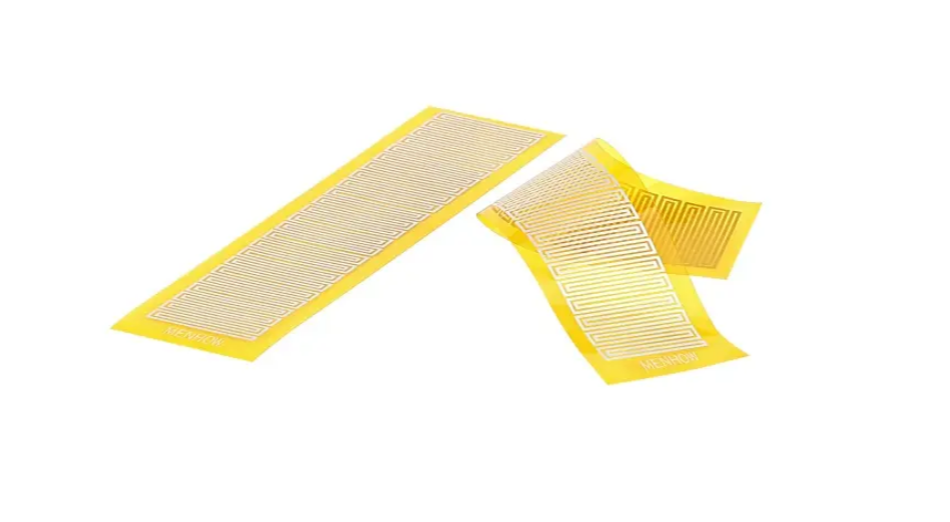
Suzhou, Jiangsu Oct 15, 2026 (Issuewire.com) - Inside a medical research laboratory, engineers evaluated a temperature-sensitive diagnostic unit designed for field deployments in sub-zero environments. The team needed to maintain critical fluid samples within a tight temperature window without adding physical bulk or heavy heating blocks to the handheld casing. Traditional wire heating elements introduced uneven hot spots and bulk, whereas standard rigid heaters failed to contour around the compact internal fluid channels. Replacing bulky heaters with a flexible, high-precision heating element solved the mechanical constraints while ensuring uniform surface temperature across the sample chamber. In response to these complex design challenges, modern flexible electronics technology provides lightweight, surface-conformal alternatives. Suzhou Menhow (https://www.menhowsz.com/contact-us/) delivers advanced functional components designed to meet stringent technical specifications. Among its specialized capabilities, the company provides professional OEM printed heating circuits solutions (https://www.menhowsz.com/printed-circuits/) engineered to address targeted thermal management requirements. By depositing functional conductive and resistive inks onto thin polymer substrates, printed flexible heaters achieve even heat distribution, rapid thermal responsiveness, and structural adaptability across diverse operating environments. Technical Architecture of Printed Heating Circuits Printed heating elements rely on precision screen printing or roll-to-roll additive manufacturing techniques to deposit resistive circuit patterns onto flexible substrate materials. Standard substrates include Polyethylene Terephthalate (PET), Polyimide (PI), and Thermoplastic Polyurethane (TPU). Each material selected by Suzhou Menhow serves distinct operational demands: Polyethylene Terephthalate (PET) offers a cost-effective, durable base suitable for low- to medium-temperature applications up to 80°C. Polyimide (PI) provides high thermal stability and electrical insulation, supporting operational demands reaching higher thermal thresholds. Thermoplastic Polyurethane (TPU) provides high elasticity and stretchability, allowing printed heaters to conform directly to flexible textiles, 3D curved surfaces, and wearable devices. Unlike traditional round-wire heating coils that generate heat along concentrated lines, OEM printed heating circuits utilize a flat conductive trace design. Carbon, silver, or PTC (Positive Temperature Coefficient) conductive inks are printed in optimized geometric trace patterns to form a continuous resistive layout. Thin-film heating elements maintain a planar structure, typically ranging between 0.1 mm and 0.5 mm in total thickness. This flat profile allows seamless integration into tight spaces, sandwich assemblies, and multi-layer electronic housing units without adding bulk. Custom busbar layouts, thick-film silver tracks, and specialized terminal connections are engineered into the circuit boundary to enable efficient current distribution. The resulting flat patch heater structure can be die-cut into customized shapes, allowing engineers to accommodate mounting holes, complex contours, and narrow instrument housings. Engineering Advantages in Thermal Management The transition from rigid heating blocks to flexible printed electronics introduces several performance improvements in thermal efficiency and system design. Traditional wire heaters rely on conductive heat spreading through secondary metal plates, which frequently creates thermal gradients and localized overheating. Printed heating circuits generate heat uniformly across the entire printed area. Depending on the substrate choice and power input, these printed heaters can reach target operational temperatures within 30 to 90 seconds. Eliminating hot spots reduces thermal stress on surrounding components and improves energy efficiency in battery-powered devices. Designers can specify localized power density levels ranging from 0.1 W/cm² to 5 W/cm² based on application requirements. In complex subassemblies, single circuit designs can feature multi-zone heating configurations. By adjusting line trace widths and ink resistance across different regions of the substrate, higher heat output can be targeted toward colder perimeter zones while maintaining lower temperatures across sensitive central components. Standard low-voltage skin-contact applications operate safely between 20°C and 50°C, while specialized industrial heating elements achieve steady operational temperatures up to 80°C. Flexible printed heaters feature high fatigue resistance and can endure repeated bending without circuit trace degradation. Equipped with pressure-sensitive adhesive backings, these planar heaters adhere directly to curved plastic housings, metallic containers, or flexible textile linings. This direct surface contact reduces interface thermal resistance, maximizing heat transfer efficiency to the target surface. Engineering Integration and OEM Customization Capabilities Delivering reliable flexible heating components requires rigorous engineering controls across both the circuit fabrication phase and structural encapsulation. Suzhou Menhow integrates material development, circuit printing, and custom rubber processing within a unified production environment. During the OEM design phase, engineering teams generate tailored schematic layouts based on specified input voltages, target resistance values, and geometric dimensions. High-precision printing processes maintain silver ink alignment tolerances within ±0.1 mm, ensuring consistent electrical properties across mass production runs. To achieve precise closed-loop temperature control, surface-mount or printed Negative Temperature Coefficient (NTC) thermistors can be integrated directly onto the same flexible substrate alongside the heating traces, eliminating the need for external wire harnesses. For applications exposed to moisture, chemical cleansers, or physical wear, Suzhou Menhow provides matched Liquid Silicone Rubber (LSR) molding and overmolding capabilities within the same manufacturing site. Encapsulating the printed heating circuit within high-grade silicone creates a completely sealed, IP-rated waterproof assembly. This process protects conductive traces from oxidation, electrical shorting, and mechanical damage. To support transition from initial prototype sampling to full-scale production, Suzhou Menhow assigns technical engineers to manage New Product Introduction (NPI) engineering change orders, thermal field mapping, and environmental testing. Production processes adhere to certified quality management frameworks, including ISO 9001, ISO 14001, ISO 13485 for medical devices, and IATF 16949 for automotive components. Products also comply with global RoHS environmental standards, verifying material safety for international distribution. Industrial Applications Across Specialized Sectors Flexible printed heating circuits solutions serve critical roles across medical care, automotive electronics, and industrial equipment: Healthcare and Wearable Therapy: Medical-grade bioelectrode and heating assemblies provide consistent thermal therapy in wearable physical rehabilitation wraps, portable pain relief pads, and blood fluid warming systems. Smooth, sealed surfaces allow for thorough disinfection and patient safety. Automotive Electronics: Integrated behind side-mirror glass, camera sensor windows, and seating assemblies, flexible heaters prevent fogging, clear ice, and provide occupant comfort. Battery pre-heating pads maintain lithium-ion battery packs within optimal operational temperature windows during cold ambient conditions. Industrial Controls and Smart Home Appliances: Compact printed heaters prevent condensation inside outdoor control cabinets, display panels, and automated fluid dispensation nozzles. Smart home devices utilize thin-film heaters in ambient comfort equipment and moisture-control units. Conclusion By combining precision screen-printed electronic circuits with specialized in-house silicone rubber molding, Suzhou Menhow offers a reliable approach to lightweight thermal management. Integrating printed heating circuits into compact product designs allows engineering teams to achieve uniform thermal performance, low profile packaging, and high structural durability. To learn more about custom design parameters, substrate options, and testing procedures, thermal design engineers can review complete product specifications and request technical documentation directly through the official company website: https://www.menhowsz.com/
Source :Suzhou Menhow Electronic Co., Ltd.
This article was originally published by IssueWire. Read the original article here.
More News








YOUR NEWS, OUR NETWORK.
Do you have Great News you want to tell the world?
Be it updates about your business or your community, you can make sure that it’s heard by submitting your story to our network reaching hundreds of news sites across 6 verticals.