Salary report: What differentiates remote developers who earn $100K+

Jun 10, 2022

A salary survey by remote career platform Arc shows that remote developers making more than $100,000 in annual salaries differ in key ways, from their specialization and employer’s business stage to the currency they earn in.

(PRUnderground) June 10th, 2022
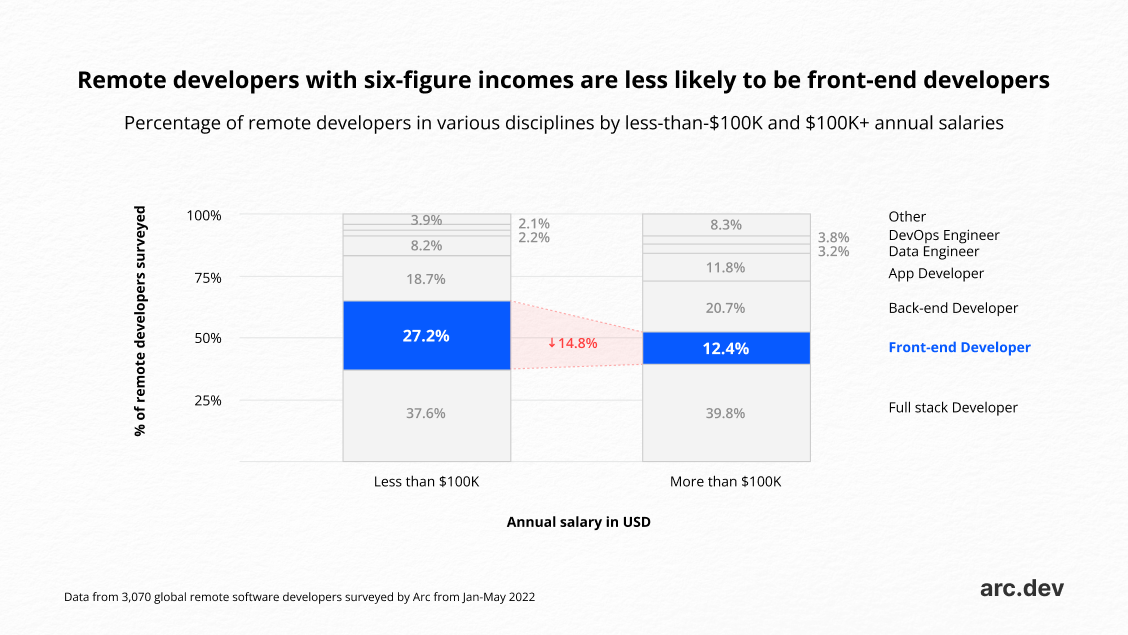
Significant differences exist between remote developers who make USD 100K per year and those who do not. That’s according to a six-figure remote developer salary report released by remote career platform Arc.

Arc analyzed salary data from 3,070 global remote developers received from January to May 2022. Some key takeaways include:

  1. Discipline: Remote developers with six-figure incomes are less likely to be front-end developers. Only 12.4% of $100K+ developers specialize in frontend development while 27.2% of developers earning less than $100K do so.

  2. Businses Stage:

    • Remote developers with six-figure salaries are more likely to work in public companies. 43.3% of the $100k+ group are from public companies, while only 28.1% of the under-$100K group are in public companies.

    • In contrast, developers with $100k+ income are less likely to work in early-stage startups. 15.9% of $100k+ devs work in pre-seed and seed-funded companies, while 24.4% of non-$100K devs do so.

  3. Currency: Six-figure remote developers are much more likely to earn in USD. ​​The majority of six-figure developers, at 69.4%, get paid in US dollars. In contrast, only 32.3% of non-$100K devs do so.

“Although not all developers earn six-figure incomes, those that do have certain things in common,” says Arc CEO Weiting Liu. “Arc’s survey data shows that strategic career pivots — into or away from certain disciplines, roles, and employers — can help developers increase their chances of earning these top salaries. Early career developers should be intentional about their career choices to ensure they stay on track toward higher earnings. And for non-US-based developers, remote work has opened more doors to earn in US dollars. This strongly increases the chance of a high salary.”

Additional findings regarding country, role title, and seniority include:

  1. Country:

    • Country of employer HQ: Developers with six-figure incomes are much more likely to work with US employers — 61.5% vs 19.9%. That difference is a whopping 41.5%.

    • Country of residence: Devs making six figures are more likely to be based in the US — 31.8% vs only 0.9%.

  2. Role title: 

    • $100k+ devs are more likely than the under-$100K group to have the title of “Team Lead” — 22.9% vs 15.2%.

    • Devs making $100K+ are less likely to be “Individual contributors”. 59.9% of $100K devs work as individual contributors while 65.2% of under-$100K devs do so.

  3. Seniority: Developers with a $100K+ salary are more likely than under-$100K devs to be senior developers with 6 or more years of experience — 68.5% vs 35.8%.

Please visit the full report here.

About Arc:

Arc is a radically different remote job search platform for developers. We connect developers worldwide with tech companies hiring remotely. We have over 1 million developers in our network. Our mission is to help anyone build an amazing remote career from anywhere.

The post Salary report: What differentiates remote developers who earn 0K+ first appeared on PRUnderground.

Press Contact

Name: Christine Orchard Phone: +886975516390 Email: Contact Us Website: https://arc.dev/

Original Press Release.

More News

Van silences doubters in Pantoja rematch as Tsarukyan, Pitbull score dramatic UFC 331 finishes
Sep 20, 2026

Van silences doubters in Pantoja rematch as Tsarukyan, Pitbull score dramatic UFC 331 finishes

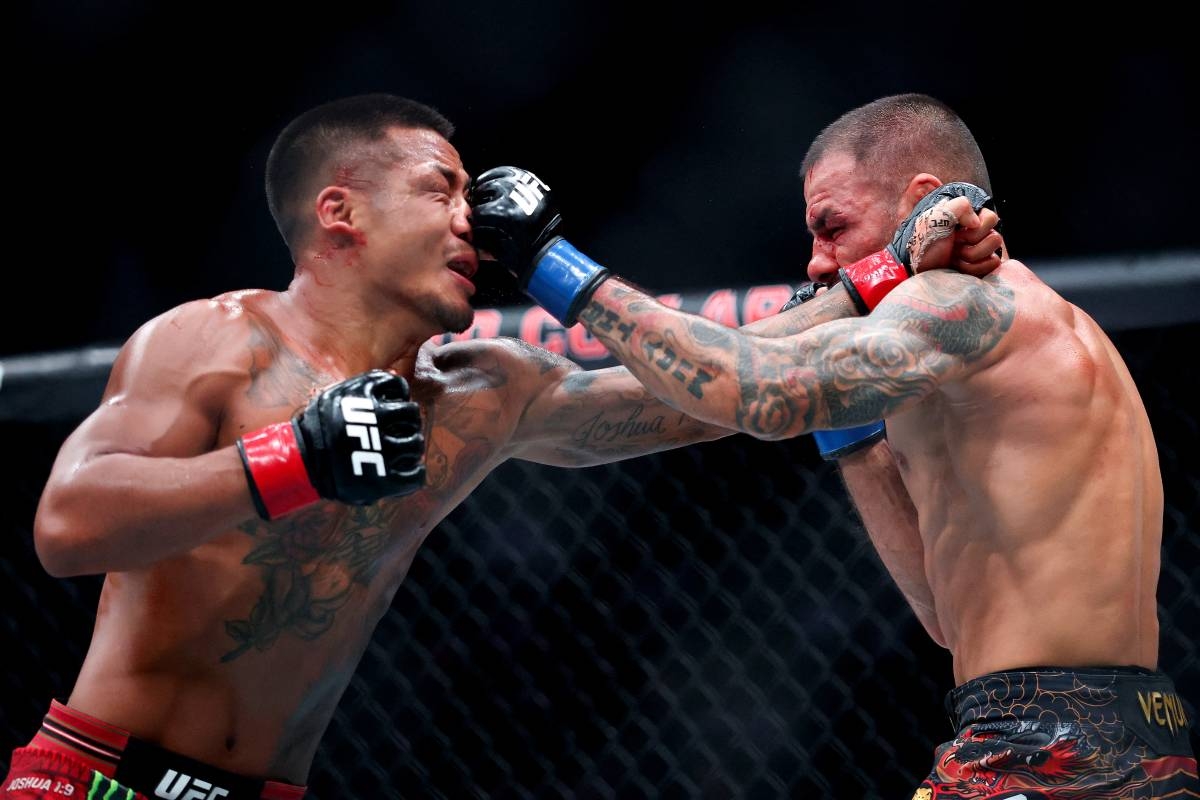
LOS ANGELES — Flyweight Champion Joshua Van erased the controversy surrounding his first victory over Alexandre Pantoja by defeating the former champion over five rounds Saturday, then declaring that his UFC flyweight title could no longer be dismissed as the product of an accidental injury. “A lot of people said that was an accidental win the first time,” said Van (18-2). “Now doubt me now.” Van said critics had questioned his legitimacy after Pantoja (30-7) suffered an injury early in their first meeting. The rematch gave the champion the opportunity to prove himself in a complete fight against the division’s former standard-bearer. Van, who had his boxing skills and takedown defense on full display, finished with 140 significant head strikes, to Pantoja’s 99. The champion praised Pantoja’s durability and championship-level skill, particularly after the Brazilian escaped a submission attempt Van believed would finish the fight. “Shoutout to Pantoja,” Van said. “Nothing but respect from me." Van’s decisive victory strengthened the legitimacy of his championship reign, while Pantoja’s toughness added significance to the performance. In the co-main event, No. 2-ranked lightweight Arman Tsarukyan (24-3) strengthened his claim to the next title shot with a dramatic first-round knockout of No. 7 Mauricio Ruffy (14-3), who was coming off a TKO victory over Michael Chandler at UFC Freedom 250. Ruffy successfully defended Tsarukyan’s early takedown attempts, but the Armenian changed levels late in the round before switching to an elbow that landed flush. With Ruffy badly hurt, Tsarukyan followed with another elbow that knocked the Brazilian unconscious at 4:56, just four seconds before the horn. The victory extended Tsarukyan’s winning streak to six. “Of course, for my next fight, for the title fight, I needed that finish, and I knew that I’m gonna finish him,” Tsarukyan said. “It was a little bit difficult in the first round, but I knew I had five rounds, and my time was going to come. So I was patient.” Tsarukyan later joked that he wanted either a lightweight championship fight or a showdown with Meta founder Mark Zuckerberg. No. 15-ranked featherweight Patricio Pitbull (38-9) reinforced his place in the rankings with the 13th first-round finish of his career — and his first knockout since joining the UFC. The former two-division Bellator champion rocked Dooho Choi (17-5-1) with a crushing right hand, then swarmed “The Korean Superboy” with follow-up punches, forcing referee Mike Beltran to stop the fight at 3:28. Pitbull called the performance his “real debut” in the UFC before challenging Jean Silva. Sean Sharaf (5-2) produced one of the night’s biggest shocks, knocking out heavily favored heavyweight prospect Gable Steveson (4-1) just 12 seconds into their bout. Sharaf connected with a clean 1-2 combination, with the left hook turning Steveson’s head and leaving the Olympic gold medalist unconscious on the canvas. Referee Frank Trigg immediately stopped the fight, giving Sharaf his first UFC victory and a finish tied for the third-fastest knockout in UFC heavyweight history. “I’m not surprised,” Sharaf shouted before explaining that he continued believing in himself when few others did. Steveson left the Octagon before the official announcement, drawing criticism from several fighters and social media observers. No. 14-ranked light heavyweight Alonzo Menifield (19-6-1) overcame a gruesome hand injury and a difficult opening round to hand Iwo Baraniewski (9-1) his first professional defeat. A ringside physician examined Menifield’s badly damaged left thumb before the third round, but the Los Angeles native insisted on continuing. Menifield ultimately prevailed by split decision, with two judges scoring the fight 29-28 for him and the third returning a 29-28 card for Baraniewski. The victory was Menifield’s second straight. The severity of the injury became apparent during Menifield’s post-fight interview, when he revealed that he had broken the thumb in the opening round and displayed what appeared to be bone protruding through the skin.

YOUR NEWS, OUR NETWORK.

Do you have Great News you want to tell the world?

Be it updates about your business or your community, you can make sure that it’s heard by submitting your story to our network reaching hundreds of news sites across 6 verticals.