MCU Selection and Supply in AI Hardware: A Technical Guide from CONEVO for Smart Product Manufacturers

Oct 15, 2026
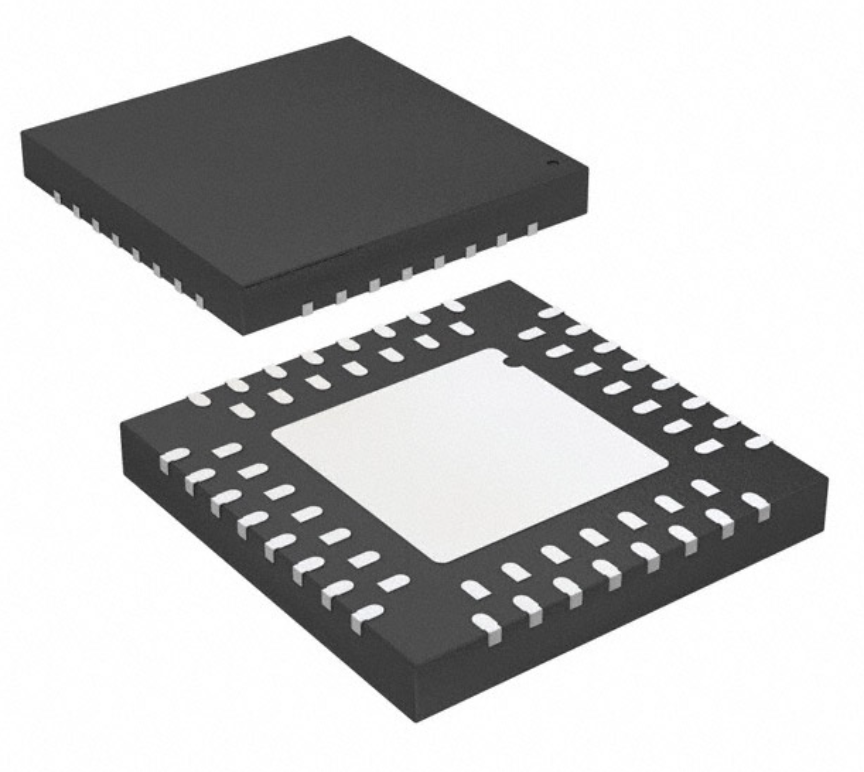


Shenzhen, Guangdong Oct 14, 2026 (Issuewire.com) - The microcontroller is usually the first component locked into a smart product design and the last one anyone wants to change. By the time firmware, certification, and tooling are in place, an MCU swap is no longer a component decision -- it is a schedule decision. Yet a large share of the problems that reach production floors are traceable to an MCU that was selected for the prototype rather than for the finished product: not enough flash for over-the-air updates, sleep current that never matches the datasheet, or a part number that goes on twelve-week allocation two weeks before a build. Conevo Electronics (https://www.conevoelec.com/about-us/) is a Hong Kong-based IC chip distributor that holds microcontrollers as physical stock, and the questions coming back from engineering and purchasing teams fall into a consistent pattern. Most of them are not about clock speed or core benchmarks. They are about memory headroom, real low-power behaviour, pin-compatible alternates, and whether the same part number will still be available for the next build. Where MCU Problems Actually Show Up In volume production, MCU failures rarely look like a dead chip. They look like firmware that no longer fits, or power figures that miss the specification sheet. Memory exhaustion during the OTA stage A device that runs comfortably in 128 KB of flash during development needs roughly double that once dual-bank firmware update, a bootloader, and a wireless stack are added. Teams that size flash to the first working build almost always end up either stripping features or migrating mid-project. Sleep current that does not match the datasheet Published stop-mode and standby figures are measured under specific conditions -- peripheral clocks gated, GPIOs configured, brown-out detection and internal regulators in defined states. In real hardware, a single floating input pin or an unconfigured peripheral clock can raise deep-sleep current by an order of magnitude. This is the single most common cause of battery life falling short of projection in wearables and remote sensor nodes. Reset and brown-out behaviour under load transients When a motor, relay, or RF transmitter switches, the supply rail dips. If the brown-out threshold sits close to the sag point, the MCU resets intermittently -- a fault that appears in the field far more often than on the bench, because bench supplies are stiffer than coin cells and long cable runs. Analog performance in a noisy board Integrated ADCs are convenient, but effective resolution depends on reference stability, sampling time, and ground layout. A 12-bit converter delivering eight usable bits is a layout and configuration issue, not a defective part. Matching MCU Parameters to Real Operating Conditions Selecting an MCU on unit price alone tends to relocate cost into firmware effort and board revisions. The parameters worth mapping against actual operating conditions are these: Flash and RAM headroom: Plan for the finished product, including OTA dual-image storage, a communication stack, and diagnostic logging. A practical target is 40-50% free flash at first release. Core class and math requirements: A Cortex-M0+ class device is sufficient for sensor aggregation and control loops. Sensor fusion, audio processing, or on-device inference generally require an M4 or M33 with FPU and DSP instructions. Low-power mode structure: Compare wake-up latency, RAM retention options, and whether an RTC and a low-power timer can run in the deepest available mode. Wake-up time matters as much as sleep current in duty-cycled designs. Peripheral mix and mapping: Count not only interfaces but also DMA channels, timer resources, and pin-mux conflicts. Two peripherals that cannot be routed simultaneously are a redesign, discovered late. Temperature grade: Outdoor gateways and body-worn devices need industrial-grade parts ('40 °C to +85 °C or wider); consumer-grade silicon in an enclosed housing with a power stage nearby is a marginal design. Security features: Secure boot, unique device ID, cryptographic acceleration, flash readout protection and TrustZone support are increasingly required by regulation and by customers, and are very difficult to retrofit. Package and pinout family continuity: Choosing a part from a series with pin-compatible memory and peripheral variants creates a migration path that needs no board change. Where a first-choice MCU carries a long lead time, CONEVO's technical staff can review a shortlist against the intended operating environment and propose alternates -- either a larger-memory sibling in the same family or a comparable device from another manufacturer that retains the critical parameters. The Board Boundary: Power, Reset, and Programming Access No MCU compensates for an unsupported power and reset network. The recurring issues are straightforward and well documented: One decoupling capacitor per supply pin, placed against the pin, with the internal regulator capacitor value taken from the datasheet rather than inherited from a previous design. Reset and boot-mode pins pulled to defined levels, never left floating, and kept away from switching nodes. A decision made deliberately between the internal RC oscillator and an external crystal -- internal oscillators typically hold ±1-2%, which is adequate for internal timing but not for asynchronous UART links or protocol timing. Debug and programming pads retained on the production board. Removing SWD or JTAG access to save space makes field firmware recovery and failure analysis impossible. Unused GPIOs configured in firmware rather than left in their default state, which is the practical fix for most unexplained sleep-current results. On request, CONEVO can review the MCU section of a BOM -- supply pins, reset network, oscillator choice, package availability -- as a sanity check before a part number is fixed. Stock Planning Across MCU Variants One product family often shares a single MCU series while each variant needs a different memory size or package. Ordering a unique part number for each variant raises holding cost and exposes the schedule to allocation swings. CONEVO weights stock toward the MCU families that appear repeatedly in real designs -- widely used 32-bit Cortex-M devices and established 8-bit controllers in common memory and package options -- held as physical inventory in Hong Kong, with quantity, manufacturer, date code, and packaging confirmable before a purchase order is placed. Specialized, high-density, and automotive-grade devices are covered through a global sourcing network across Asia, Europe, and North America. Two things matter to a team waiting on parts. The first is response speed: quotations on in-stock MCUs are typically answered within hours during Hong Kong business hours, and Hong Kong's air links allow same-day or next-day dispatch on confirmed stock orders. The second is continuity and authenticity. Reordered part numbers are tracked so follow-on builds receive the same manufacturer and marking rather than an undocumented substitute, and incoming material passes appearance, marking, and packaging inspection -- a meaningful control for MCUs, which are among the most frequently re-marked devices in the open market. Where a part genuinely cannot be sourced at a workable price, saying so early is more useful than a quotation that cannot be honoured. Building Reliable Intelligent Hardware Dependable MCU deployment rests on three connected activities: selecting for the finished product rather than the prototype, verifying the power, reset, and clock network around the device, and maintaining a stock plan with a defined migration path. Memory headroom, low-power configuration, and second-source planning are all far cheaper to resolve before mass assembly than after units ship. CONEVO combines stock distribution of microcontrollers with the technical discussion that normally has to happen alongside it. For specifications, current stock status, or a quotation, please visit https://www.conevoelec.com/

Source :Conevo Electronics

This article was originally published by IssueWire. Read the original article here.

More News

Sovereignty wins Breeders' Cup Classic
Nov 1, 2026

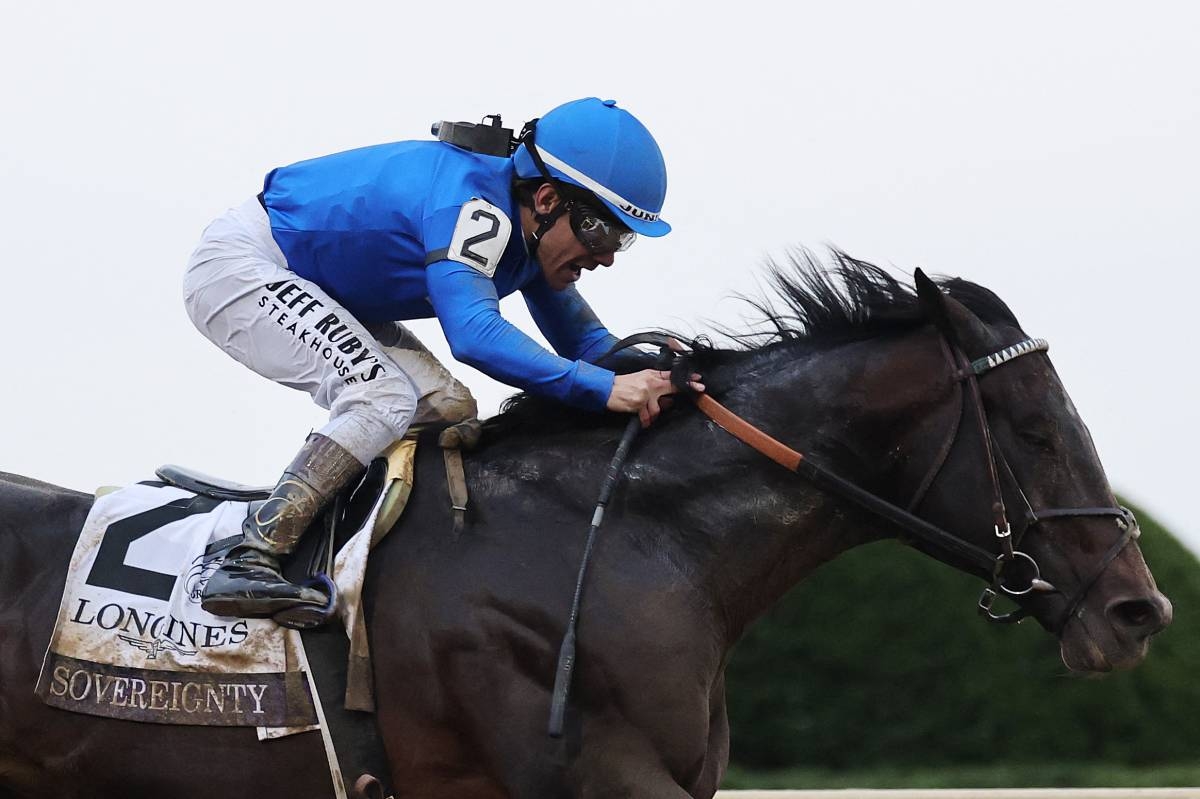
Sovereignty wins Breeders' Cup Classic

LOS ANGELES, United States — Sovereignty won the $7 million Breeders' Cup Classic at Keeneland on Saturday, denying Forever Young a rare repeat in the showpiece of the racing extravaganza. Trained by Bill Mott and ridden by Junior Alvarado, 2025 Kentucky Derby winner Sovereignty seized his first chance at the Classic after he was scratched from last year's edition because of a fever. He was beaten twice to open his 2026 campaign, and his Classic participation was again threatened by a hoof abscess, but Alvarado said he never doubted that Sovereignty could win the Classic. "What he did today, Sovereignty, it's just spectacular," Alvarado said. "We really wanted to run so bad the Classic last year. I'm just so glad the Godolphin team gave us a chance to keep him in training and get to do what he did today." Sovereignty settled in well behind pace-setting stablemate Knightsbridge and left no doubt when Alvarado set him loose at the top of the stretch. He finished ahead of The Puma, with Knightsbridge third. Forever Young, who gave Japan a first Classic winner at Del Mar last year, ran just behind Knightsbridge for much of the way but faded to finish fifth. "Turning in the back side ... I was like oh boy, it's like I can't wait to turn for home because I knew the power I have underneath me," Alvarado said. "The way he was traveling the whole time, letting me know, like, I'm here for you. I never had a doubt the whole way around." Golden Tempo, this year's Kentucky Derby winner, lagged throughout, never producing his trademark late run.

Hamilton takes record 105th pole and first for Ferrari, as Antonelli lurks
Nov 1, 2026

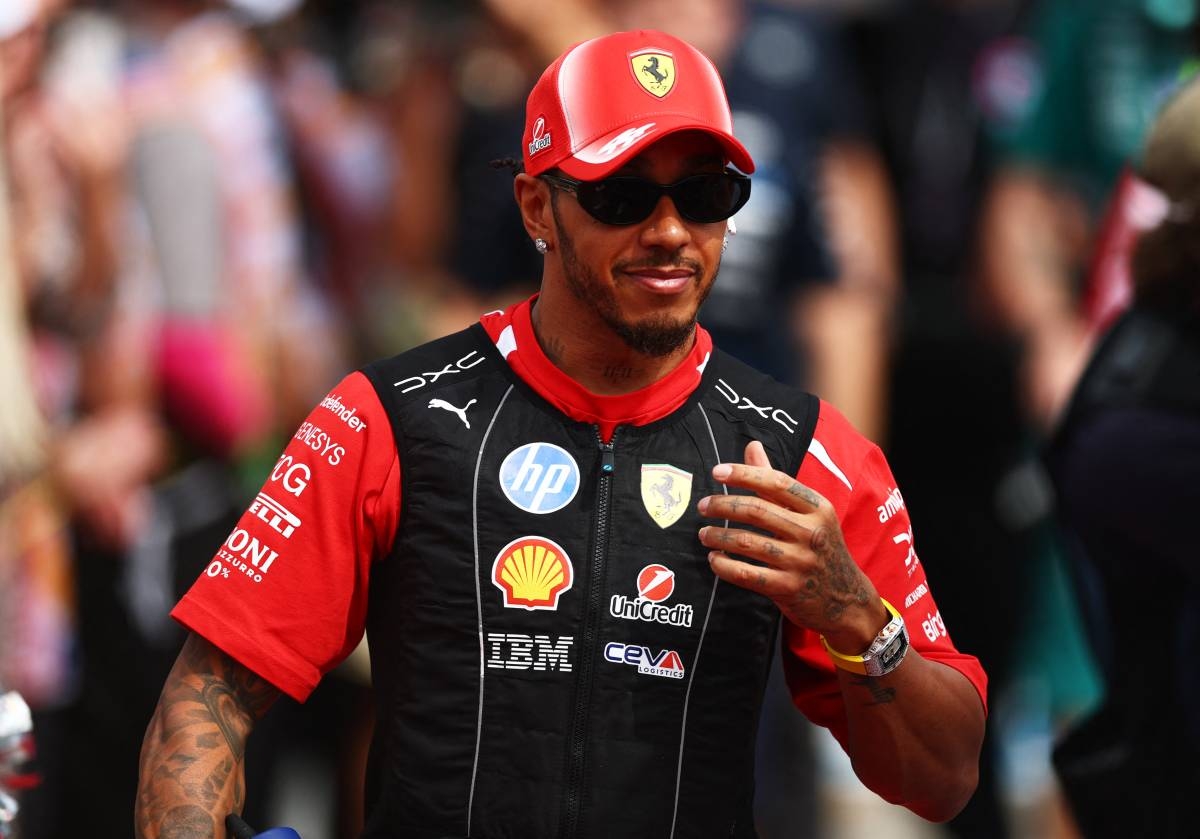
Hamilton takes record 105th pole and first for Ferrari, as Antonelli lurks

MEXICO CITY, Mexico — Lewis Hamilton became the oldest man to claim a pole position since 1982 when he secured his first pole for Ferrari ahead of Mercedes' George Russell in Saturday's qualifying for the Mexico City Grand Prix. Hamilton and Russell needed to be fastest. They are the only drivers who have a chance of preventing Kimi Antonelli clinching the title on Sunday. Each of the front-row pair needs to win and hope the Italian finishes worse than ninth. For seven-time champion Hamilton it was a first pole success since the Hungarian Grand Prix in 2023 and enlarged his record total to 105 poles. It was his second pole in Mexico after taking the prime grid position in 2016. At 41, he became the oldest pole sitter since Mario Andrette claimed the final pole of his career aged 42 at the 1982 Italian Grand Prix, also for Ferrari. In a thrilling finale, Hamilton clocked a best lap of one minute and 16.514 seconds to outpace his former team-mate Russell by 0.009 seconds with his Ferrari teammate Charles Leclerc taking third place ahead of Red Bull's four-time champion Max Verstappen, who has a one-place grid penalty for Sunday's race. Antonelli was fifth for Mercedes ahead of McLaren's outgoing world champion Lando Norris, Isack Hadjar of Red Bull, Racing Bulls' duo Liam Lawson and Arvid Lindblad, and Pierre Gasly of Alpine. The 20-year-old Italian, who will start fourth, can become the sport's youngest champion on Sunday, and Italy's first since Alberto Ascari in 1953, if he finishes in the top nine or Russell and Hamilton both fail to triumph. "Thank you so much, that's been such a long time coming," said Hamilton on team radio before adding "that feels good!" "It's been such a really tough and challenging weekend," Hamilton said."I think it's my first pole for Ferrari and now 105 poles! I like that number." Russell, who is 123 points behind Antonelli in the title race while Hamilton is adrift by 124, said: "It's been a tricky few races for me and I'm still struggling until I get one lap in Q3! I always knew it was there." Leclerc said: "I just didn't do a good job when I needed to, but to start third here is not too bad." - Local hero - The session began when local hero Sergio Perez, set to start his 300th Grand Prix, led the queue out of the pits before Aston Martin told Fernando Alonso to "stop the car on track", which he did, prompting a red flag stoppage. Hamilton had gone top before the two-time champion, clearly dismayed at his fate, came to a halt and climbed out close to the packed stadium section of the circuit. Race Control reported he was noted for 'general safety'. The action resumed after a seven-minute hiatus before Williams' Alex Albon joined Alonso, Ryo Hirakawa, drafted in by Haas to replace the dropped Esteban Ocon, Lance Stroll in the second Aston Martin and both Cadillacs in being eliminated. At 32, the Japanese two-time world endurance champion and Le Mans winner Hirakawa  battled gamely. "Lost a lot," he said after finishing 19th. "You did a good job, don't beat yourself up," replied race engineer Laura Mueller, 24 hours after her clash with Ocon. Hamilton topped Q1 ahead of Hadjar and made a fast start to Q2 before locking up at Turn 13 on entry into the stadium section. This left him needing a second run to reach Q3 behind Verstappen and Leclerc, with Antonelli seventh, as McLaren's Oscar Piastri missed the cut in 13th and went out along with both Audis, Alpine's Franco Colapinto, Oliver Bearman of Haas and Williams' Carlos Sainz. The shootout began with Mercedes first out, but Leclerc set the pace after the first runs with Verstappen second, 0.045 adrift, and Antonelli seventh. In the final flying laps for pole  Russell edged ahead before Hamilton blitzed to the top of the pile.

'Canelo' Alvarez wins back WBC title from Mbilli in Riyadh
Nov 1, 2026

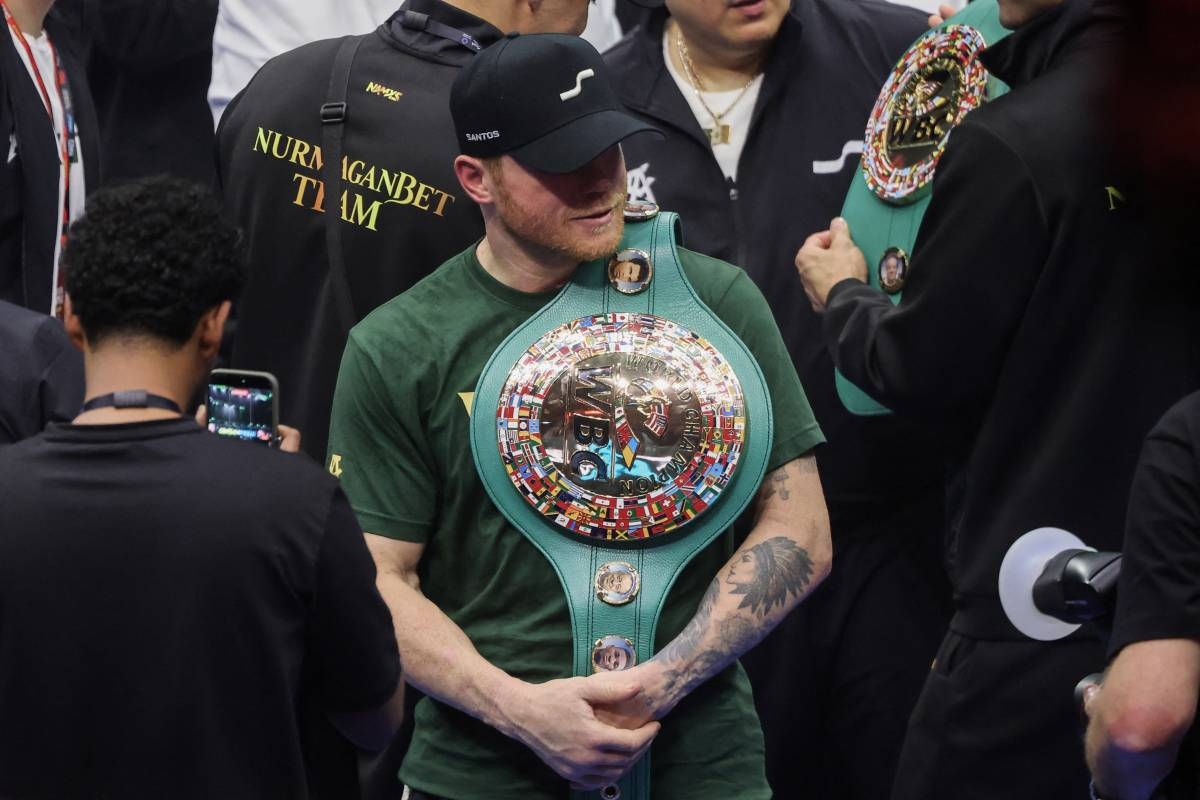
'Canelo' Alvarez wins back WBC title from Mbilli in Riyadh

RIYADH, Saudi Arabia — Mexican veteran Saul "Canelo" Alvarez produced a commanding performance to defeat French fighter Christian Mbilli and regain his WBC super middleweight title in an emotional victory in Saudi Arabia. Alvarez won a 12-round decision in Riyadh after exerting his influence in the second half of a fight that went ahead despite the escalating conflict between Saudi Arabia and Yemen's Houthi movement. The 36-year-old Mexican was returning to the ring for the first time since he was beaten by American Terence Crawford in September 2025. That loss ended Alvarez's reign as holder of the division's four major titles. He faced Mbilli, 31, who was elevated to titleholder in January, but a fight that started off as a tight contest turned into a convincing victory for Alvarez. The judges scored the contest 115-112, 116-111 and 117-110 in Alvarez's favour. The Mexican superstar struggled for words after receiving the belt. "It's so difficult to explain, it's so difficult to explain," Alvarez said in English. "It's something unbelievable. It feels like my first title. Now, after 20, 21 years as a professional -- 16 years ago, I won my first title. Now I won the title again." Alvarez added another world title to a haul that stretches from light-middleweight to light-heavyweight in a 20-year career. A host of other sporting events have been called off in Saudi Arabia since the Houthis launched drone attacks and the Saudis intercepted missiles this week. The Six Kings Slam tennis exhibition event and the final round of the World Rally Championship have been cancelled but the world of combat sports continues to hold events in the kingdom. Alvarez hinted at the security situation when he thanked his family "who are watching me from afar today for the first time". He was the more composed boxer in the opening round in Riyadh but by round three Mbilli was ripping off combinations and looking the more active of the two fighters. The Frenchman took the initiative in round five although the bout remained a tactical battle. Alvarez began showing his class and ringcraft in the sixth, easily winning the round, but it was in the seventh that he really pressed home his advantage, pinning Mbilli to the ropes and delivering a right uppercut that had the Frenchman rocking on his feet. In the eighth, Mbilli had a point taken away for punching behind the head and he seemed to lose more momentum from then on, allowing Alvarez to begin dictating the fight in the next round as the wily veteran pulled ahead of his younger opponent.

Swimmer Ajido, wushu bet Polo plunge into action in Youth Olympic Games
Oct 31, 2026

Swimmer Ajido, wushu bet Polo plunge into action in Youth Olympic Games

DAKAR —Jamesray Mishael Ajido plunges into action in swimming and Angel Polo brings her young act in wushu as competitions kick off on Sunday, a day after Africa welcomed close to 3,000 athletes to the fourth edition of the Youth Olympic Games (YOG) that’s being played for the first time in the African continent. Ajido swims in the third of four heats for the men’s 100 meters butterfly at 10:54 a.m. (6:54 p.m. in Manila) at the Complexe Tour de l’Ceuf pool, while Polo vies for a final 8 seat against 10 opponents in the preliminary round of women’s Taijishian at the Diamniadio Expo Centre starting at 10:12 a.m. (6:12 p.m. in Manila). “I hope to do my best here, because these are the YOG and it’s already a once-in-a-lifetime opportunity to be here,” said Ajido, 17, and an 11th grader at Homeschool Global. “I trained very hard for months for this.” It would be a swim against the tide for Ajido—silver medalist at the 2024 Southeast Asian age-group championships and a Palarong Pambansa record holder—in the event where 31 swimmers will be targeting the eight berths in the final scheduled 3:32 p.m. (Dakar time) also on Sunday. Polo, who’ll turn 16 this December 21, brings with her a bronze accomplishment at the 10th World  junior championships in Tanjin, China, last March—on the YOG mat where she’ll be facing 11 opponents in the traditional Chinese martial art. Shy and unassuming, the 10th grader at Pasay North City High School said she’s happier than ever competing on the most prestigious sporting stage for junior athletes. “Very very happy,” she said, adding that her school allowed her to take a leave from her academics to train for Dakar. “I trained twice a day under coach Li [Chinese Li Jianfang] from 9 to 11 in the morning and 4 to 7 in the afternoon and evening,” she said. On Monday, Polo will again compete in the women’s Taijiquann preliminaries and it will be Riannah Chantelle Coleman’s turn in the pool in the women’s 200 meters breaststroke heats. The wushu finals are scheduled Monday. “We know that our young athletes have prepared themselves for these YOG and we’re hoping for the best results,” said Philippine Olympic Committee president Abraham Tolentino, who’s been monitoring the team here along with secretary-general Atty. Wharton Chan and chef de mission Rocky Samson. Dakar and Senegal opened the YOG on Saturday night with hundreds of dancers celebrating Senegalese and African culture unde the games’ motto “Africa welcomes, Dakar celebrates.” IOC president Kirsty Coventry and Senegal  President Bassirou Diomaye Faye declared the games open at 6 at the 55,000-seat Abdoulaye Wade Stadium in Diamniadio, a rising city 30 kms from the capital. TMT

YOUR NEWS, OUR NETWORK.

Do you have Great News you want to tell the world?

Be it updates about your business or your community, you can make sure that it’s heard by submitting your story to our network reaching hundreds of news sites across 6 verticals.