
Laser Rangefinder Market in Military Industry Expected To Reach USD 803.4 Million by 2023 With CAGR of 6.29%
Nov 8, 2018
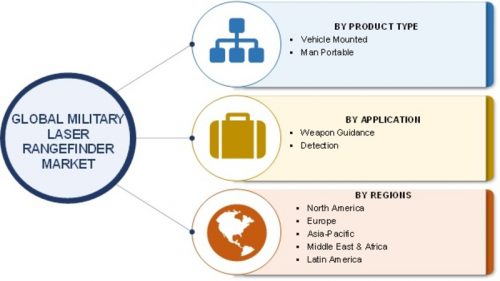
Military Laser Rangefinder Market Research Report 2018: Industry Size, Share, Trends, Growth and Opportunity Assessment, Regional Analysis and Segmentation By Type (Vehicle Mounted and Man Portable), by Application (Weapon Guidance and Detection) and by Regions - Global Forecast To 2023
Pune , India - November 8, 2018 /MarketersMedia/ —
Global Military Laser Rangefinder Market – Overview
Development of 21st century digital warfare means has changed the outlook on defense. Many countries have been rapidly moving towards upgradation of their current airborne offence & defense systems. This never-ending race between detection and stealth technologies is the major reason for rapid developments within technologies such as drones, and military rangefinders as well as their applications. Military laser rangefinders market is expected to be driven primarily by growing demand for lightweight laser rangefinders and miniature rangefinders.
Lightweight rangefinders provide advantages such as faster mobility, and significantly reduced fatigue among troops on account of low weight as well as added built-in functions such as GPS, and data sharing. Miniature rangefinders are also expected to find increased preference in the next few years. Miniature rangefinders not only allow size advantage but also provide with increased accuracy & safety as well as efficient military operations.
Get Sample Report with Complete TOC @ https://www.marketresearchfuture.com/sample_request/4218
Ability to achieve high level of integration and interoperability along with unmanned air vehicles (UAV) is expected to create large opportunities for laser rangefinders. Inception of miniature rangefinders, coupled with the rapid implementation of UAVs for numerous military operations has opened up an entirely new avenue for the laser rangefinder market.
Although rangefinders as a product has advanced at a very fast pace, inherent damage on health following prolonged usage is yet to be tackled completely. Issues ranging from skin damage to corneal inflammation and retinal burn haven’t been resolved. Apart from health concerns, market for laser rangefinders is also affected by shortcomings in its operation in difficult weather conditions. Although night vision feature has already been implemented in lot of rangefinders, inability of lasers to operate in smoke screens as well as extreme weathers such as dense fog, storm, and heavy snow poses a major obstacle for the market growth.
The military laser rangefinder market was valued at USD 530.2 million in 2016 and is expected to reach USD 803.4 million by 2023 with a CAGR 6.29%, during the forecast period 2017-2023.
Key Players:
• L3 Technologies Inc. (U.S.)
• Leonardo S.p.A. (Italy)
• Northrop Grumman Corporation (U.S.)
• Thales Group (France)
• Elbit Systems Ltd (Israel)
• FLIR Systems Inc. (U.S.)
• Lockheed Martin (U.S.)
• Saab AB (Sweden)
• Safran Electronics & Defense (France)
• Jenoptik AG (Germany)
These are some of the major players that have been profiled in this report. These companies majorly drive innovation and advancement within this industry which help shape the outlook for this market.
Industry News
May 2017: FNSS Savunma Sistemleri revealed the first prototype of its Kaplan MT Modern Medium Weight Tank (MMWT) at the IDEF 2017 exhibition. This tank is equipped with a computerized fire-control system (FCS) which incorporates a laser rangefinder for stabilised day/thermal sighting system.
February 2017: Elbit Systems entered into a technical collaboration Bharat Electronics Limited (India), a defense sector public sector company, for joint production and maintenance of Compact Multi-Purpose Advanced Stabilised System (CoMPASS).Bharat Electronics Limited would be supply as well as provide maintenance services to CoMPASS users in India.
February 2017: Northrop Grumman signed a five year-contract worth USD 16.9 million with the US Army. The contract includes provision of maintenance, repair, and sustainment services for the Lightweight Laser Designator Range Finder (LLDR) systems.
January 2017: China enhanced PGZ-07 capability with the installation of a new sensor pod, existing sensor pod is positioned above the tracking radar, which is mounted on the forward part of the turret, and includes a laser rangefinder.
January 2017: Lockheed Martin signed a contract worth USD 150.9 million, with the US Navy, to develop a target sight system for the Cobra attack helicopter. The sight system is an infrared system with a laser and rangefinder turret.
Early Diners Are Offered Free Customization- Up to 20%
Get Attractive Discount @ https://www.marketresearchfuture.com/check-discount/4218
Global Military Laser Rangefinder Market – Segmentation
The report includes study as well as of Military Laser Rangefinders market, categorized into segments as described below –
Application Segment – includes analysis of the market broken down into weapon guidance application and detection application
Type Segment – includes analysis of the market broken down into man-portable (carried by soldiers) type and vehicle-mounted type
Global Military Laser Rangefinder Market – Regional Analysis
North America held a dominant one-third share of the global market for military laser rangefinders market in 2016. One of the prime reasons for its dominance is the presence of major manufacturers and the country’s huge allocations to homeland security and defense. It is expected to be continue holding a prime share on account of large investments as well as rapid implementations of technological advancements in the defense technologies. Asia-Pacific market as well as the Middle East & Africa market are expected to exhibit faster growth as compared to other regions. This growth can be primarily attributed to rising military expenses on advanced technologies to counter as well as mitigate growing border conflicts and terrorist activities.
Table of Contents
1 Executive Summary
2 Introduction
2.1 Definition
2.2 Scope of the Study
2.3 Assumptions
2.4 Market Structure
3 Market Highlights
3.1 Key Takeaways
3.2 Key Buying Criteria
4 Research Methodology
4.1 Research Process
4.2 Primary Research
4.3 Secondary Research
4.4 Market Size Estimation
4.5 Forecast Model
Continued......
Ask for your specific company profile and country level customization on reports.
Get More Information on Military Laser Rangefinder Market Research Report - Global Forecast To 2023 @ https://www.marketresearchfuture.com/reports/military-laser-rangefinder-market-4218
Contact Info:
Name: Abhishek Sawant
Email: Send Email
Organization: Market Research Future
Address: Market Research Future, Office No. 524/528, Amanora Chambers, Magarpatta Road, Hadapsar, Pune -411028, Maharashtra, India
Phone: 6468459312
For more information, please visit https://www.marketresearchfuture.com/reports/military-laser-rangefinder-market-4218
Source: MarketersMedia
Release ID: 440477
More News











YOUR NEWS, OUR NETWORK.
Do you have Great News you want to tell the world?
Be it updates about your business or your community, you can make sure that it’s heard by submitting your story to our network reaching hundreds of news sites across 6 verticals.