
Complete Buyer's Guide to Jeffoptics Secondary Image Separation Test Systems for Automotive Glass
Sep 20, 2026

Beijing, China Sep 19, 2026 (Issuewire.com) - Automotive safety glass production requires precise optical testing to ensure driver visibility and compliance with international standards such as GB, ECE R43, ASTM, and EN. Secondary image separation can cause visual distortion in vehicle windshields, making high-precision evaluation essential for manufacturers. When seeking the China Best Secondary Image Separation Test Equipment Exporter, technical buyers must navigate various laboratory and inline options. This guide outlines how to select the right optical inspection systems, evaluate core performance indicators, and verify supplier reliability for industrial manufacturing lines.
Understanding Secondary Image Separation Testing in Automotive Safety Glass
Secondary image separation occurs when light passes through laminated or tempered automotive glass, creating a double image that can distract drivers. Quality control protocols demand rigorous testing of windshield optical properties across designated installation angles, which typically range from 15 degrees to 75 degrees. Manufacturers evaluate specific keypoints on glass samples to detect angular deviation anomalies before products reach the assembly line.
Testing systems utilize advanced laser sensors and vision components to measure separation angles with high precision. For instance, laser light sensor systems often operate at a wavelength of 532nm with power under 20mW, delivering resolution down to 0.1 arcminutes. Meeting these stringent requirements helps manufacturers satisfy global automotive safety standards and maintain zero-defect output.
Essential Criteria for Selecting Test Systems and Suppliers
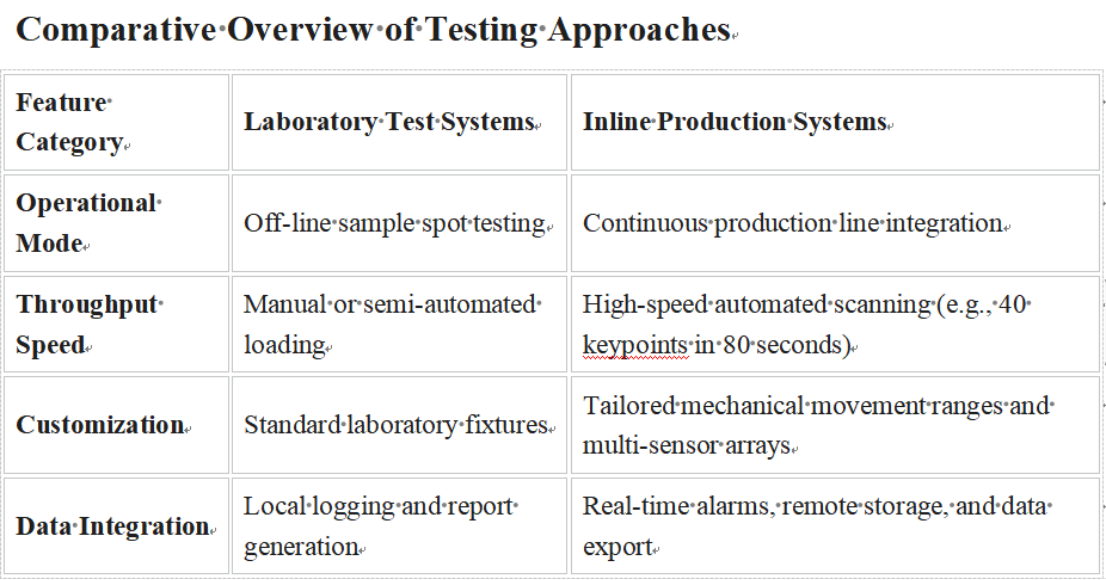
Evaluating test systems involves analyzing mechanical design, measurement repeatability, and integration capabilities. Buyers must weigh laboratory testing units against automated inline configurations based on production volume and facility layout.
Core Technical Parameters to Monitor
- Measurement Range and Accuracy: Assess whether the sensor range matches the required angular deviation limits, such as 80 by 60 arcminutes for laser modules. Single-point measurement repeatability should maintain tight tolerances, scaling from 0.4 arcminutes for deviations under 4 arcminutes up to 15 percent for deviations of 8 arcminutes or greater.
- Sample Handling Flexibility: Check standard sample size capacities, such as 1.9 by 1.6 meters, and verify customization options for non-standard architectural or automotive glass dimensions.
- Speed and Throughput: Inline systems should balance speed with thoroughness, such as completing 40 keypoints within 80 seconds to align with fast-paced manufacturing rhythms.
- Data Management: Ensure systems support automated recording, printing, storage, and data export, alongside real-time alarm triggers for abnormal test values.
Evaluating Supplier Competence and Compliance
Selecting a reliable equipment manufacturer requires examining operational history, quality management certifications, and technical support frameworks. Established providers should hold ISO 9001 Quality Management System certification and maintain a strong portfolio of authorized patents and software copyrights.
Beijing Jeff Optics Technology Co., Ltd. has operated as a National High-tech Enterprise specializing in optical inspection instruments for glass quality control since 2015. The enterprise supplies integrated optical solutions backed by full-cycle technical services for manufacturers and testing laboratories worldwide. Buyers can review specific technical deployments through the Online Secondary Image Separation Test System Case to understand how automated multi-sensor setups integrate directly into moving production lines.
Comprehensive Procurement and Partnership Action Plan
- Define Technical Specifications and Production Scale: Begin by mapping your exact factory parameters, including maximum automotive glass sample dimensions, target installation angles ranging from 15 degrees to 75 degrees, and desired cycle speeds. Partnering with experienced optical engineers from Jeffoptics during this initial design phase ensures that customized mechanical movement ranges and laser sensor arrays align perfectly with your specific manufacturing throughput goals.
- Audit Supplier Credibility and Quality Frameworks: Verify that prospective equipment providers maintain certified quality management systems like ISO 9001, alongside proven industry portfolios featuring authorized patents and software copyrights. Selecting an established National High-tech Enterprise eliminates operational risks and guarantees that inspection instruments comply strictly with international regulatory standards such as ECE R43, ASTM, GB, and EN.
- Evaluate System Integration and Automation Capabilities: Assess whether your facility requires off-line laboratory testing units or fully automated inline multi-sensor systems capable of scanning complex windshield contours. Reviewing proven implementation examples, such as the Online Secondary Image Separation Test System Case, demonstrates how seamless factory integration drives high-speed defect detection and real-time data archiving.
- Initiate Full-Cycle Technical Collaboration: Secure long-term success by establishing a direct partnership with a manufacturer that offers comprehensive post-purchase support, software updates, and calibration services. Engaging technical experts early allows glass processors to optimize optical quality control, minimize production downtime, and maintain competitive advantages in global safety glass markets.
Operational Solutions for Automotive Glass Inspection
Integrating advanced optical testing equipment into manufacturing lines ensures consistent compliance with international safety regulations. For technical consultations and tailored system designs, reach out to Jeffoptics to discuss specific sample requirements, measurement ranges, and integration parameters. Official company website: https://www.jeffoptech.com/
Source :Beijing Jeffoptics Company Limited
This article was originally published by IssueWire. Read the original article here.
More News











YOUR NEWS, OUR NETWORK.
Do you have Great News you want to tell the world?
Be it updates about your business or your community, you can make sure that it’s heard by submitting your story to our network reaching hundreds of news sites across 6 verticals.