Attention Focused on Wu Liying’s New Artwork at the 39th International Lanting Calligraphy Kyoto Exhibition

Nov 4, 2023

The 39th International Lanting Calligraphy Exhibition is currently being held at the Miyako Messe in Kyoto. (Photo via Merxwire)

Kyoto, Japan (Merxwire) – The 39th International Lanting Calligraphy Exhibition, which was held at Miyako Messe in Kyoto, Japan, featured calligraphy works from China, Taiwan, Japan, and South Korea. The exhibition took place from November 4th to November 6th. Sponsored by MerxArt, Taiwanese female artist Wu Liying presents her new calligraphy work titled “JING GUAN,” which had already captured the attention of numerous collectors before even arriving in Kyoto. Throughout the exhibition, she utilizes social media to promote the exhibition and the artists’ works, effectively bringing Chinese culture to the forefront of the global collector community.

The International Lanting Calligraphy Association was founded in Hangzhou, China 1984. It is a historically significant and influential international calligraphy organization with the mission of preserving Chinese culture. Over the years, the International Lanting Calligraphy Association has left its mark in cities like Tokyo, Seoul, and Taipei. It has also visited European countries such as Italy, France, and Egypt, earning recognition from various nations. In this exhibition, hundreds of calligraphers from Japan, Taiwan, South Korea, and China have been invited to showcase their work. It features various calligraphy styles and artistic characteristics from different Asian countries and various Chinese dynasties, making it a must-visit for calligraphy enthusiasts.

Wu Liying explained that “JING GUAN” extends her previous ink painting, “JING GUAN SONG CHYUAN ZIH YI YUEH.” The foreground of the ink painting features a massive pine tree, while the background showcases a waterfall and a spring. Through this artwork, Wu Liying envisions herself in a comfortable environment, enjoying the changing seasons of nature, feeling the presence of the wind, and experiencing tranquility and leisure.

Therefore, Wu Liying expressed her thoughts metaphorically through poetic lines, conveying, “I admire the green pine tree because it can endure the cold. The wind blowing is as marvelous as a dragon’s voice. The sound of waterfalls and springs playing in harmony. By quietly experiencing it all, one can attain relaxation and happiness.” This creative process gave birth to the classic piece “JING GUAN.” Life often presents situations that one must accept. Through her verses, she conveys that as one gradually adapts to these feelings, they can come to terms with their circumstances and let go of attachments, transforming negative elements into nourishment for the soul.

Taiwanese female artist Wu Liying and her artwork “JING GUAN.” (Photo via Merxwire)
Zhang Binghuang, the head of the Lanting Calligraphy Association, introduced the exhibition through a live streaming. (Photo via Merxwire)

Wu currently holds the position of Chief Executive Officer at the “Wu Liying Gallery of Calligraphy and Painting,” located in Hsinchu City, Taiwan. She also serves as the Chairman of the Taipei Chinese Painting Study Association. Committed to promoting the art of traditional Chinese painting and continuously propagating the essence of Chinese culture, she organized a series of events in Taiwan this year, including the “Taipei Chinese Painting Study Association’s 62nd Annual Members’ Calligraphy and Painting Exhibition.” The exhibition’s results have been shared online with individuals worldwide.

“The internet knows no boundaries!” stated Wu Liying. To promote cross-strait art exchanges, the Wu Liying Gallery of Calligraphy and Painting actively utilizes social media to promote traditional Chinese painting and calligraphy. She also invites artists to explain the inspiration behind their works, enabling enthusiasts of calligraphy art to understand the artworks promptly. Additionally, she documents many exhibition events, becoming a significant driver in the preservation and propagation of Chinese calligraphy and painting culture.

“Art and life are inseparable. Among the numerous artworks, people not only observe the styles and uniqueness of the creators but also witness Chinese culture and wisdom,” says Wu Liying. People choose their paths, engage in endeavors they are passionate about, experience life in reality, and use poetry to express their emotions, creating a form of “beauty.” She looks forward to the flourishing of Chinese calligraphy and painting, spreading Chinese culture to every corner of the world.

At the International Lanting Calligraphy Kyoto Exhibition, several artists gathered for a group photo. (Photo via Merxwire)

More News

Sports leaders say politics, sport remain inseparable
Oct 30, 2026

Sports leaders say politics, sport remain inseparable

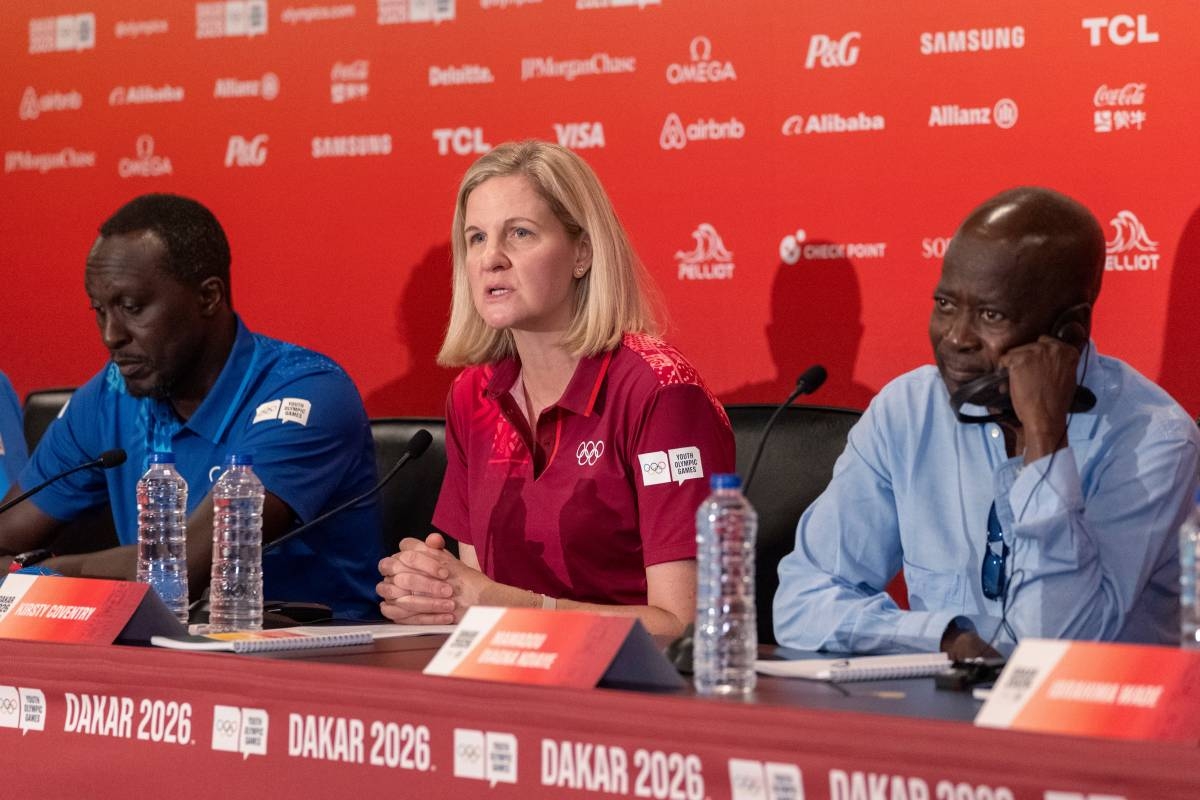
PARIS, France — International Olympic Committee (IOC) president Kirsty Coventry’s desire is that “politics does not take over on the field of play,” but Ukraine and former executives from her organization have told Agence France-Presse (AFP) that politics and sport remain inseparable. Coventry’s view will be sorely tested when Ukrainian and Russian athletes — the nations embroiled in a war sparked by Russian President Vladimir Putin launching an invasion of Ukraine in 2022 — compete side-by-side in the Youth Olympics which start in the Senegalese capital Dakar on Saturday. The 13 Russian athletes will be able to parade with their national flag and hear their national anthem at an Olympic event for the first time since the 2020 Winter Youth Games in Lausanne. The restoration of such symbols fits with the approach that Coventry indicated she would follow when she spoke at the EU Sporting Forum in Cyprus earlier this year. “Athletes can only inspire us if they are able to compete,” the Zimbabwean two-time Olympic swimming gold medalist said. “They can only do so if we keep sport strictly neutral ground, if politics does not take over on the field of play,” she added. Ukraine Sports Minister Matviy Bidnyi dismisses that view. “Any conversation about returning Russian athletes to the international arena can only happen after the war ends, a just peace is established, every single abducted Ukrainian child is returned home, and international law is fully restored,” he told AFP. “Until that moment, isolation is not political — it is a matter of basic human decency.” Former International Olympic Committee marketing executive Terrence Burns told AFP that globally speaking, “sport has never been separate from politics.” “When I hear anyone use that phrase it sounds naive at best and cynical at worst,” he said. “The real principle is neutrality. The Olympic movement only works if it stays independent of governments.” Ukraine has not employed the political weapon of boycotting sporting events Russia have competed in, a strategy that was once fashionable — three successive Summer Olympics from 1976 to 1984 were affected. In the latter two cases, the IOC was more impacted than their intended targets. “The boycott agenda of the eighties very nearly destroyed the Olympic movement,” Michael Payne, a former IOC marketing chief, told AFP. “Eventually the politicians began to understand that maybe it was a good idea for the world to come together through sport.” Burns and Payne concede that the African boycott of the 1976 Montreal Games was effective because it highlighted a multilateral campaign to isolate apartheid South Africa from world sport. “The lesson is that a boycott works when it is sustained, collective and aimed squarely at the wrongdoer,” Burns said. Payne says sport is again open to political interference. “Over the last decade, politicians have again turned to using sport as a tool to sanction, declaring who can and who cannot participate,” he said. “I have argued in my book, ‘Fast Tracks and Dark Deals,’ that the biggest single threat facing the future of sport is the growing political weaponization of sport.” Politics and sport have occasionally combined to offer hope. Both involved North and South Korea, technically still at war, but who paraded together at the 2000 Sydney Games and fielded a joint ice hockey team at the 2018 Winter Games in Pyeongchang. Though hopes of a lasting improvement in relations failed to materialize, Burns believes it was an example of how sport can offer a tantalizing glimpse of what could be possible. “Sport opens doors but it can’t make anyone walk through them,” said Burns. “Still, I think an open door is worth a great deal when every other one is shut.” While Coventry has pursued a line of neutrality, FIFA president Gianni Infantino has been accused by his critics of crossing the line in his close friendship with US President Donald Trump. Awarding him the FIFA Peace Prize was widely ridiculed. “It was a fake award, with no public criteria, jury or process,” said Burns. “I think that changed the perception of FIFA from working with a political leader to endorsing one. That’s not neutrality.” Infantino has also opened the gates to Russia, who are competing at the Under-15 football World Cup this month, and has said the ban on the country has not “achieved anything, it has just created more frustration and hatred.” Bidnyi told AFP he “totally rejects this logic.” “Removing these bans would send a terrifying signal to any future aggressor: that you can invade a neighbor, commit atrocities, and still be welcomed at global tournaments as if nothing happened.”

YOUR NEWS, OUR NETWORK.

Do you have Great News you want to tell the world?

Be it updates about your business or your community, you can make sure that it’s heard by submitting your story to our network reaching hundreds of news sites across 6 verticals.