
Application of 33 Diindolylmethane in Softgels
Oct 23, 2026
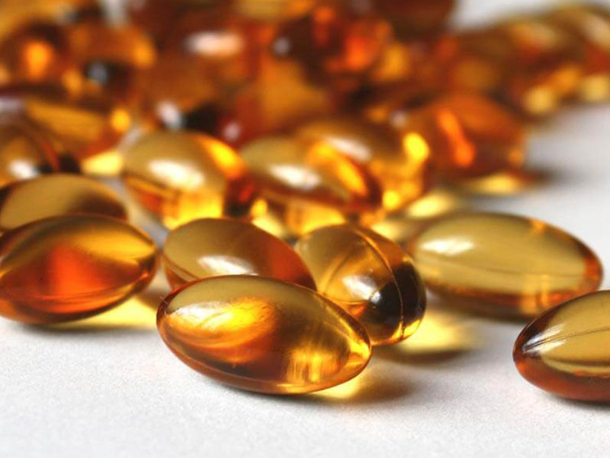
Xian, Shaanxi Oct 22, 2026 (Issuewire.com) - In the high-end dietary supplement market, 33 Diindolylmethane softgels have become a benchmark for bioavailability. However, for R&D teams and brands, transforming this highly hydrophobic active ingredient into a stable, highly absorbable oil-phase formulation is far more complex than simply "mixing in oils."
From oil carrier selection and crystal stability management to capsule compatibility and digestive pathways, every step determines the final product performance. At Le-Nutra, we provide a complete solution from laboratory validation to mass production through micronization, self-emulsification systems, and lymphatic transport technology, allowing each DIM softgel to reach its full potential.
Next, I will guide you through an in-depth analysis of the key technologies in DIM softgel development, enabling brands to quickly launch high-quality products in the women's health and hormone balance sector.
I. Why DIM is Suitable for Soft Capsule Formulation
When evaluating the suitability of a raw material for soft capsules, we typically focus on three core factors: solubility, stability, and consumer experience. Diindolylmethane powder is a perfect match for soft capsule systems in all three aspects.
-
First, there's the issue of bioavailability.
The large aromatic ring system in the diindolylmethane dim powder molecular structure results in extremely low solubility in water. If ingested directly in powder form, the dissolution process is often slow, affecting absorption efficiency. However, when dispersed in an oil phase system, it can form a microemulsion with lipids during digestion, thereby improving absorption efficiency.
Second, there's the advantage of stability.
The interior of a soft capsule is a sealed oil phase environment, which provides natural protection for many ingredients sensitive to oxygen, light, or humidity. While DIM generally has good stability, during long-term storage, exposure to varying humidity levels can lead to clumping or content fluctuations.
Finally, there's the consumer experience.
Compared to powder capsules, soft capsules generally offer a better swallowing experience and avoid the slight odor issue that DIM powder may cause. Therefore, in the European and American markets, many brands design their DIM products as 100-200 mg soft capsules.
II. Key Technological Challenges in DIM Soft Capsule Formulation
Soft capsules offer significant advantages in absorption efficiency and consumer experience, but developing 33 Diindolylmethane products is far more complex than simply "adding powder to oil." In actual R&D, we typically encounter several core challenges that directly impact the stability and market performance of the final product.
First is the issue of solubility and crystal precipitation. While bulk diindolylmethane powder is a fat-soluble component, its solubility in common vegetable oils is limited. If the oil phase system design or dissolution process is inadequate, crystal precipitation can easily occur during storage. Crystals not only precipitate inside the soft capsule but can also lead to uneven content, even affecting product appearance and consumer trust in the brand. Therefore, conducting solubility tests and accelerated stability experiments during the development phase is crucial for ensuring its long-term uniformity and stability in the oil phase.
Second is the selection of the oil phase system. In soft capsules, oil is not only a solvent but also directly determines the dispersibility, absorption efficiency, and stability of the active ingredient. Common DIM carrier oils include medium-chain triglycerides (MCTs), sunflower oil, soybean oil, and olive oil. MCT oil is widely used due to its good oxidative stability, rapid digestion and absorption, and ability to form a stable lipid microemulsion system with DIM, thereby improving bioavailability.
Of course, different brands have different formulation strategies. Some products choose compound oils, combining different types of vegetable oils to optimize the dispersibility and long-term stability of diindolylmethane powder, ensuring consistency of the soft capsules during transportation and storage. It can be said that the selection and optimization of the oil phase not only affects technical performance but also directly relates to consumer experience and market reputation.
III. Avoiding Pitfalls: A Few Suggestions for Purchasing Managers
If you are evaluating suppliers or preparing to initiate a DIM soft capsule project, it is recommended to ask these three questions:
1. "Is your DIM premixed or freshly prepared?" - Premixed solutions generally have better homogeneity than freshly prepared ones.
2. "Will your formula precipitate after standing at 4°C for 72 hours?" - This is the simplest and most rigorous test to verify the quality of the formulation.
3. "Do you add Vitamin E and TPGS?" - These advanced excipients can simultaneously solve the problems of solubilization and oxidation prevention. Although they are more expensive, they are more worry-free.
IV. FAQ
Q1: Why is diindolylmethane powder suitable for soft capsules instead of powder capsules?
-
A: Because of its extremely low water solubility, soft capsules, delivered through the oil phase, improve dispersibility and bioavailability, while also enhancing stability and swallowing experience.
Q2: Which product types are suitable for DIM soft capsules?
A: Soft capsules are suitable for women's health, hormone balance, antioxidant, and phytonutrient formulations.
Q3: What quality control measures should be taken during production?
A: Key points include raw material purity, particle size distribution, solubility testing, soft capsule sealing, and long-term stability verification.
Q4: What are the storage conditions for DIM in soft capsules?
A: High temperatures, strong light, and high humidity should be avoided. Storage below 25°C in a cool, dry place is recommended to maintain long-term stability.
Q5: What are the advantages of choosing DIM soft capsules for a brand?
A: Soft capsules improve bioavailability, enhance the consumer experience, and provide a premium positioning for the product, making them the preferred dosage form for high-value dietary supplements.
V.Softgels May Become the Mainstream Dosage Form
Raw material procurement is just the starting point. The real challenge for formulators and R&D teams lies in ensuring the stable presence and efficient release of 33-diindolylmethane (DIM) within oil-based capsules. Simply focusing on price or appearance is insufficient; the core lies in the degree of micronization, solubility in the oil phase, and the stability of the formulation during long-term storage.
At Le-Nutra, we offer more than just powder; we provide a complete oil-based premix solution. Through multiple rounds of validation and optimization, we ensure that DIM maintains uniform dispersion and high stability during mass production. These solutions allow R&D teams to directly observe the dispersion effect of the active ingredient during pelleting or softgel filling, while combining this with long-term accelerated stability testing data to guarantee product reliability from the laboratory to the market. Practice has proven that the close integration of raw materials and solutions is the key to making DIM supplements stand out in the dietary supplement market.
Source :Xi’an Le-Nutra Ingredients Inc
This article was originally published by IssueWire. Read the original article here.
More News








YOUR NEWS, OUR NETWORK.
Do you have Great News you want to tell the world?
Be it updates about your business or your community, you can make sure that it’s heard by submitting your story to our network reaching hundreds of news sites across 6 verticals.