A Healthier America, a Stronger Competitive Manufacturing Economy

Oct 15, 2026

Fort Myers, Florida Oct 15, 2026 (Issuewire.com) - A Healthier America, a Stronger Competitive Manufacturing Economy

Universal coverage, provider choice and a national spending goal below 10% of GDP

By Roy J. Meidinger | Conclusion to the nine-article Healthcare in the United States series

America can provide dependable healthcare for everyone while strengthening the businesses that create jobs, goods and prosperity. Achieving both requires a clear national purpose: protect democracy, preserve patient choice and make healthcare affordable for the country as a whole.

The series proposes four connected goals: bring total national healthcare expenditures below 10 percent of gross domestic product; give everyone healthcare coverage; protect meaningful choice of medical providers; and strengthen American manufacturing so our businesses can compete more effectively at home and abroad.

These are goals for a reform to achieve and demonstrate. They offer a practical standard by which citizens can judge the proposal.

Across nine articles, we began with the patient and followed healthcare into the wider economy. A person facing an emergency cannot always compare prices, postpone treatment or walk away. The bargaining power that helps ordinary markets work can disappear when someone is frightened, sick or in pain.

We then examined insurance, hospital pricing, provider networks, financial reporting and public oversight. Those arrangements affect more than the hospital bill. They reach family budgets, wages, business investment, taxes and the cost of American production.

The central problem is a financial structure that can make necessary care difficult to obtain, difficult to understand and expensive to finance. Dedicated doctors, nurses, hospital employees and other participants deserve a system that supports their work. Reform should bring them into the solution.

The approach proposed here is Social Capitalism: shared responsibility for essential healthcare alongside a competitive economy that encourages private investment, innovation and production. Its purpose is to make social security and economic opportunity support each other.

America already has a foundation for shared healthcare responsibility. Medicare, Medicaid and community institutions serve millions of people. The American Hospital Association's 2026 statistics show that nonprofit organizations operate about 58 percent of community hospitals, with state and local governments operating another 18 percent. These are shares of hospitals, rather than hospital beds. The community service tradition is already a substantial part of American medicine. [1]

A broader healthcare guarantee would build upon that foundation. It could retain independent physicians, nonprofit hospitals and private medical businesses while extending coverage to everyone. Patients should have meaningful choices among qualified participating providers, clear information about their options and continuity of care when they change jobs or insurance arrangements. Provider payment and participation rules must make that choice practical.

Other democracies provide experience worth studying. Many have achieved universal or nearly universal coverage while maintaining private enterprise and democratic institutions. Their financing arrangements differ, and their systems have shortcomings as well as strengths. America can adapt successful features while addressing waiting times, staffing, access and quality in its own design. [2]

Government's responsibilities should be defined and limited to the tasks needed to make the guarantee work: accountable financing, clear coverage standards, fair payment rules and enforcement of applicable law. Private ownership, entrepreneurship and clinical independence can continue. Public decisions should remain open to legislative oversight, independent review and democratic accountability.

The cost goal must be equally clear. Total national healthcare spending should fall below 10 percent of GDP. That measure includes spending by households, employers, insurers and government. It prevents a reform from appearing cheaper simply because a bill moves from one payer to another.

The OECD's Health at a Glance 2025 reports U.S. healthcare spending at 17.2 percent of GDP, compared with an OECD average of 9.3 percent. That comparison makes a target below 10 percent worth serious examination. It does not establish that this particular proposal would achieve it. Reaching the target would require a detailed financing plan, a realistic transition and verified savings. [3]

Savings should come from simpler administration, effective purchasing, understandable payment arrangements and better coordination of care. Necessary treatment, fair compensation for caregivers and the financial stability of hospitals must remain part of the calculation. Progress should be published alongside measures of access, waiting times, quality and patient outcomes.

Healthcare reform also has an economic purpose. Manufacturing turns skills, machinery, research and investment into valuable products. It supports jobs, exports, suppliers and communities. America should give that wealth-creating industry a better competitive position.

Separating essential healthcare coverage from individual employment could simplify the responsibilities of manufacturers and small businesses. Lower and more predictable healthcare costs could create room for investment in equipment, worker training, production and expansion. Whether those benefits occur would depend on the financing design and business conditions, and should be measured.

Businesses and workers would still contribute to healthcare through the chosen funding system. The advantage must come from reducing the nation's total burden and improving value. A complete plan must show what families pay, what employers pay and what taxpayers pay, while protecting existing retirement commitments.

Have we identified the problem? This series has identified a central weakness: essential care depends upon financial arrangements that patients often cannot control, while unusually high costs place pressure on the wider economy.

Have we offered a better direction? We have proposed universal coverage, meaningful provider choice, independent medicine and financing designed to strengthen productive enterprise. The next task is to turn those principles into a costed, workable plan.

Would it be cheaper for the nation? That is the standard the plan must meet. Spending below 10 percent of GDP should be pursued through efficiency and responsible financing while maintaining dependable care. Coverage, choice, quality and competitiveness must advance together.

Our final purpose is clear: protect democracy through accountable decisions, protect capitalism by strengthening manufacturing and private enterprise, and expand our existing commitment to healthcare until everyone is covered. America should be a country where people can choose their caregivers, obtain necessary treatment and help build a productive economy that competes successfully with the world. A healthier people and a stronger manufacturing economy can sustain each other--and secure a better future for the nation.

Sources

[1] American Hospital Association, Fast Facts on U.S. Hospitals, 2026 (2024 survey data). https://www.aha.org/statistics/fast-facts-us-hospitals

[2] OECD, Health at a Glance 2025, Population coverage for healthcare. https://www.oecd.org/en/publications/2025/11/health-at-a-glance-2025_a894f72e/full-report/population-coverage-for-healthcare_5c968b73.html

[3] OECD, Health at a Glance 2025, United States country note. https://www.oecd.org/en/publications/health-at-a-glance-2025_15a55280-en/united-states_3517f35e-en.html

Media Contact

Saving the World


[email protected]

954-790-9407

14893 American Eagle Ct.

Source :Roy J. Meidinger

This article was originally published by IssueWire. Read the original article here.

More News

Cone surprised with Ginebra's 2-0 lead vs SMB
Oct 31, 2026

Cone surprised with Ginebra's 2-0 lead vs SMB

TIM Cone admitted he and his gritty Barangay Ginebra squad are surprised to be up, 2-0 in their PBA Season 50 Governors' Cup best-of-five quarterfinal series against powerhouse San Miguel Beermen (SMB). The Gin Kings took the series-opener, 104-95, followed by a 126-99 annihilation of the Beermen in Game 2 to move them within a victory from advancing to the semifinals. "Is everyone as surprised as I am about this?" said Cone, visibly in disbelief of how seemingly easy Ginebra has handled SMB through the first two games of the series. "We didn't even dream that we would be able to get out, even 1-1, much less 2-0." With solid team play and defense as Ginebra's trump card, the Gin Kings were smoking from the field en route to finishing Game 2 with a hot 55.1-percent shooting. Ginebra also outrebounded San Miguel, a team that boasts of nine-time league Most Valuable Player June Mar Fajardo, 48-30, while the team also enjoyed a massive 32-14 advantage in assists department. Import Jordan Murphy has also found his rhythm as evidenced by his near triple-double effort of 33 points, 10 rebounds and nine assists. Ginebra's backcourt pair of RJ Abarrientos and Scottie Thompson delivered all-around numbers, too, while Stephen Holt provided the spark, too. Abarrientos went on to score 22 points, highlighted by four threes, along with five rebounds and six assists, Holt scattered 19 laced with five triples while Thompson added 12 points, seven rebounds and 11 assists. "We're definitely on a roll. Our offense is clicking and guys are locked in defensively. We are just trying to keep the pressure on San Miguel, keep on attacking, keep going at him, and so far, it's working," Cone stressed. And while Ginebra is just a win away from reaching the Final Four, Cone isn't one who will make a big deal of their series advantage. "I don't have any complaints at this point. But again, two games doesn't make a series as we all know. We've heard that many times," he added. The American coach knows the Beermen are always capable of coming back. For one, San Miguel, the league's all-time winningest team is the only ball club in professional basketball history to complete a comeback from a 0-3 deficit and win the Philippine Cup finals series against Alaska in the 2016 season. San Miguel will try to live for another day and win Game 3 as the series set next Tuesday, will shift to the Dasmariñas Arena in Cavite.

LeBron, Maxey fuel 76ers over NY Knicks
Oct 31, 2026

LeBron, Maxey fuel 76ers over NY Knicks

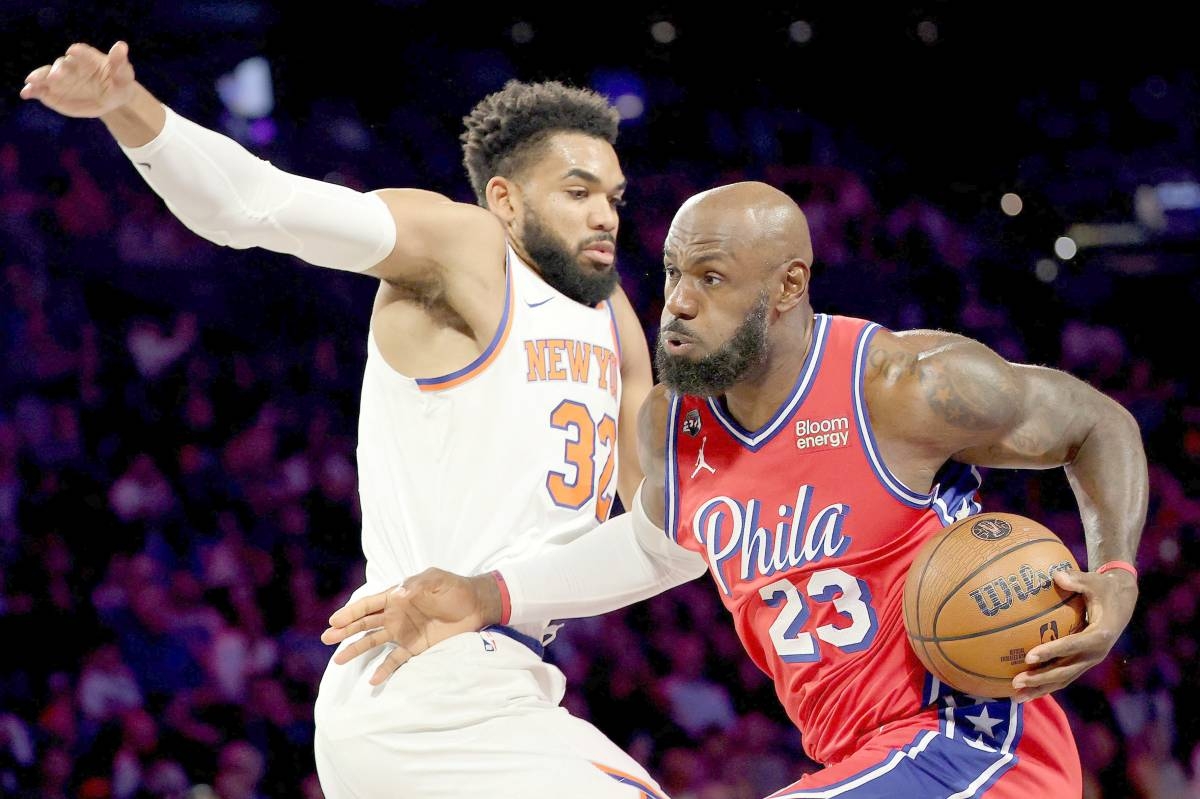
LOS ANGELES, California — LeBron James scored 20 points including a late tip-in to help seal the Philadelphia 76ers’ 98-93 victory over the NBA champion New York Knicks on Friday (Saturday in Manila). The 76ers notched their second win of the young season over the Knicks after spoiling their championship banner-raising with a victory at Madison Square Garden on opening night. The win had a double edge as Friday’s games marked the start of the fourth edition of the NBA Cup, the NBA in-season tournament won by the Knicks before they went on to beat the San Antonio Spurs in the NBA Finals for their first championship since 1973. Group-stage Cup games will be played throughout November, all counting in the regular-season standings. Quarterfinals will be played Dec. 4–5 and semifinals Dec. 8–9 before the final on Dec. 11 at Hinkle Fieldhouse in Indianapolis, Indiana. Tyrese Maxey scored 27 points to lead the Sixers, who took control early against the sloppy Knicks. They led by 14 in the third quarter and weathered a late Knicks surge. Jalen Brunson’s step-back three-pointer put New York up, 90-89, with 1:32 remaining. James, the NBA’s all-time leading scorer, answered with a basket that put Philadelphia back in front and pushed the lead to 96-91 with a tip-in off a Maxey miss with 11.9 seconds left. James, 41, added nine rebounds, eight assists, one steal and a vintage chase-down block in what 76ers coach Nick Nurse called his best game since joining as a free agent in June. Brunson led New York with 24 points, and Karl-Anthony Towns added 22 points and 12 rebounds for the Knicks, who fell to 2-4. The Dallas Mavericks, fueled by 35 points from Kyrie Irving and 33 from Cooper Flagg, rallied to hand the Houston Rockets their first defeat of the season, 116-111. The Rockets had emerged from a back-and-forth first half with a 51-44 lead, pushing the advantage to as many as 11 before taking an eight-point lead into the final frame. Irving’s three-pointer with 7:01 remaining put Dallas back in front, and they wouldn’t trail again, the Mavs finding an answer when Houston twice pulled level in the final stretch. Golden State star Stephen Curry scored 31 points to lead the Warriors to a 112-95 victory over the Los Angeles Lakers in a roller-coaster contest in San Francisco. The Lakers out-scored the Warriors, 38-15, in the first quarter, the Warriors erasing the 23-point deficit by outscoring Los Angeles, 38-15, in the second to knot it 53- 53 at halftime. Luka Doncic scored 37 points for the Lakers.

Novak builds 3-shot lead in Mexico Open
Oct 31, 2026

Novak builds 3-shot lead in Mexico Open

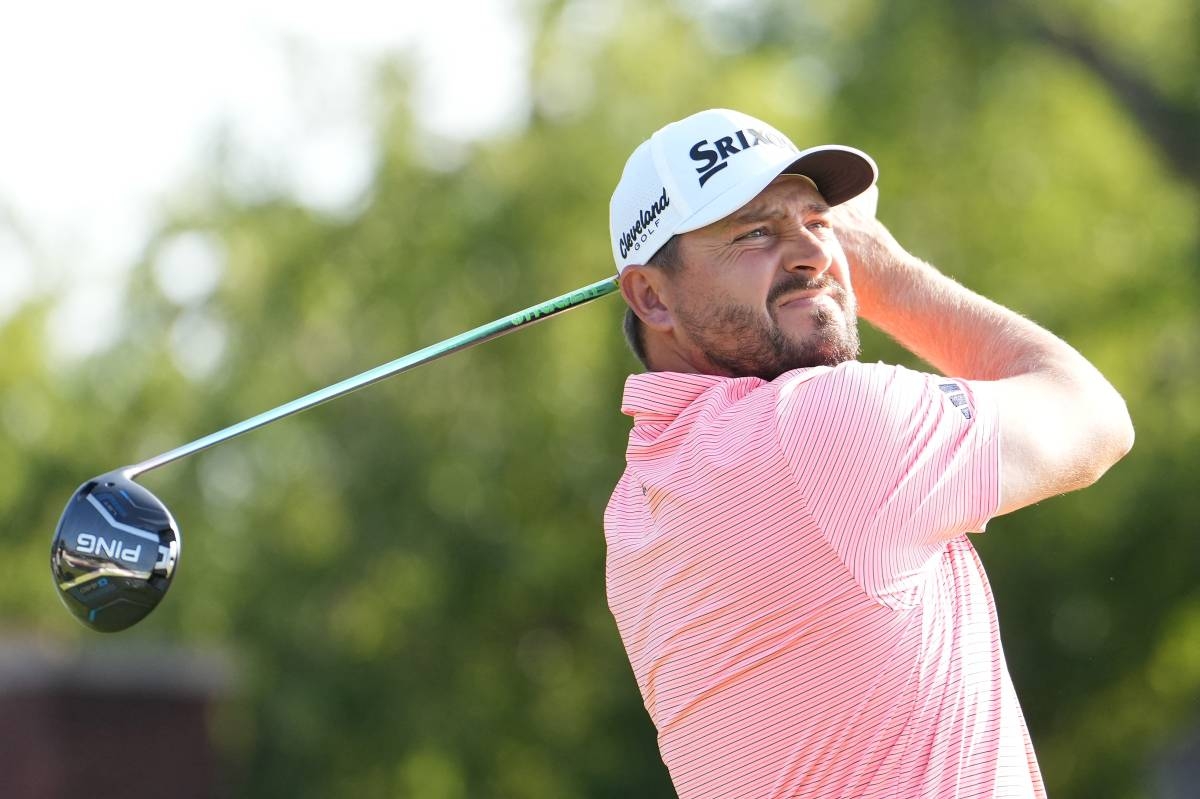
VALLARTA, Mexico — Andrew Novak caught up to the lead with an eagle and pulled away with three birdies on his last four holes Friday (Saturday in Manila) to match his low score on the PGA Tour, a 10-under 61 that gave him a three-shot lead in the Mexico Open. Novak drove the reachable par-4 13th and holed a 12-foot eagle putt and it looked to be a two-man race to the finish line of the second round between him and Ben Griffin. But on the par-4 15th, Griffin drove into the water and had to scramble for a bogey, while Novak holed a birdie putt from just outside 15 feet for a two-shot swing. Novak closed with a 20-foot birdie putt to finish at 14-under 128, three shots over a group of five players that included Griffin (67) and Kihei Akina, the 20-year-old sophomore at BYU who had a 64 to post his ninth round of 67 or lower in his last four PGA Tour starts. Also in the mix were Matthieu Pavon (66), Adrien Dumont du Chassart (67) and Kensei Hirata of Japan (68). "I separated a little bit, but we're halfway there. There's so much golf to play," Novak said. "I'm going to have to go out and keep hitting a bunch of fairways. If I'm hitting my irons like this, I'm going to be able to give myself a lot of opportunities. "I don't know if I'll make as many putts as I did today, but as long as I'm maximizing my opportunities and make a few of those with the putter, I should be in a good spot." Conditions have been favorable for scoring at Vidanta Vallarta. The average score for the opening two rounds was roughly two shots below par. The cut came at 4-under 138. Among those who failed to make it to the weekend were Tony Finau, who missed a 6-foot birdie putt on the final hole for a 71 to miss the cut by one, and US Open champion Wyndham Clark (73), the only player from the top 10 in the world in the field. Novak, who reached the Tour Championship last year, is at No. 89 in the FedEx Cup Fall. He recently checked his statistics and found them similar to last year, except for the putting. "I was just truly one of the worst putters in the world for — well, on the PGA Tour — for about eight months," Novak said. "I turned a bunch of 66s and 67s into 69s and 70s and that doesn't really get it done out here. I think the putter I put in at Wyndham has actually shown up, and my game never left; it's still there. Now when I actually am putting decent, it's turning into good results." Alvaro Ortiz, who grew up in Guadalajara, overcame a double bogey on the 18th hole at the turn and shot 68. He was five shots behind, the low Mexican player going into the final two rounds. Ortiz won the Mexico Open when it was a PGA Tour Latinoamérica event. He will have a full card on the PGA Tour next year from being in the top 20 on the Korn Ferry Tour.

LIV Golf faces uncertain future as players flee
Oct 31, 2026

LIV Golf faces uncertain future as players flee

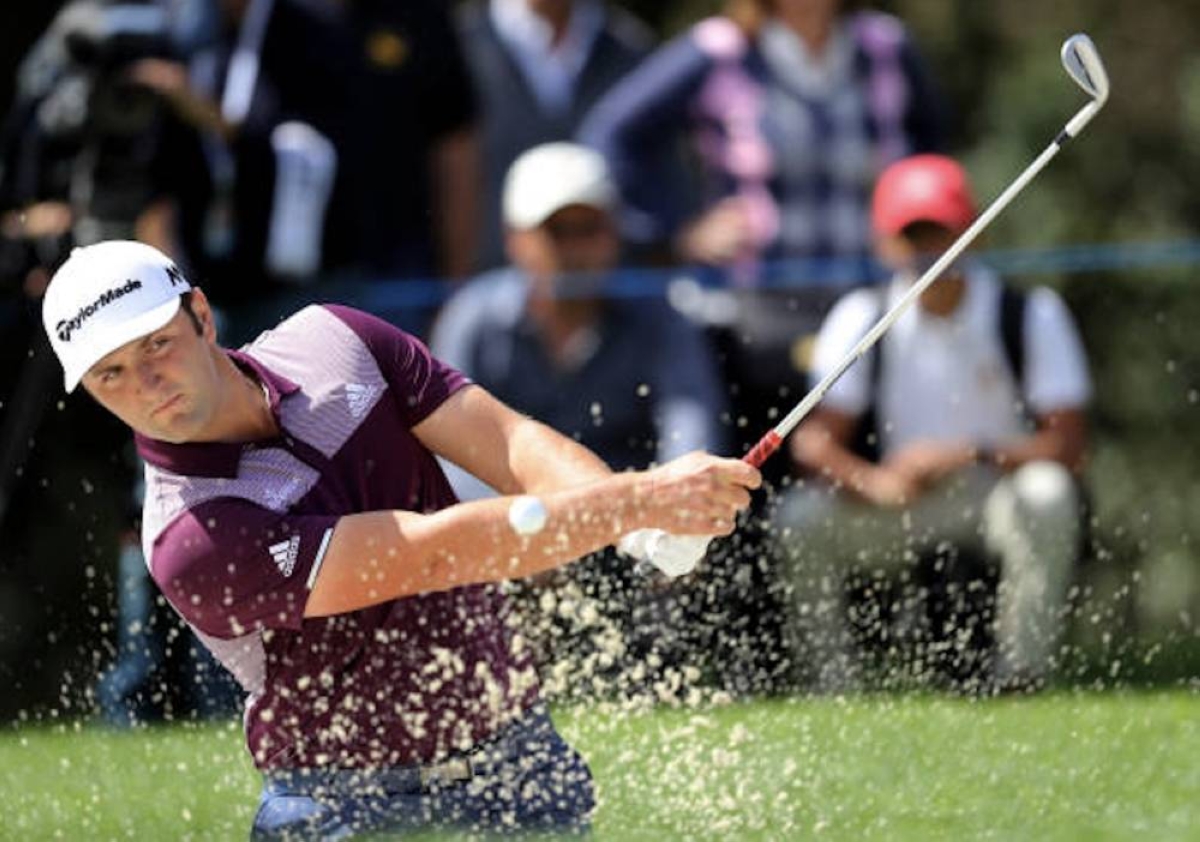
LIV Golf didn't generate this much suspense at tournaments when the music was blaring, the Saudi cash was flowing freely and players from the Cleeks and Majestics headed off in carts for the shotgun start. Every day, there's more speculation. Who's leaving? Who's staying? Weren't these the same questions four years ago? It was May 31, 2022, when a group of golf writers out to dinner in Ohio received emails announcing the field for the inaugural LIV Golf event — Dustin Johnson and 12 other PGA Tour members — and had to leave before the crème brûlée arrived. And now another waiting game, not for the launch but whether LIV survives. LIV Golf is working through Chapter 11 bankruptcy with a pledge of $300 million from BC Partners Credit, a far cry from the $5 billion the Public Investment Fund of Saudi Arabia dropped in four years before abruptly pulling the plug. Key to the "LIV 2.0" version — at least 10 tournaments, player equity and prize money half of what it used to be — is getting a "critical mass" of players to buy into the plan. How many players comprise a critical mass is unclear. And while LIV officials don't plan to announce each decision piecemeal, players are doing that for them. Jon Rahm and Sergio Garcia have court-approved separations from LIV and are free to go. Louis Oosthuizen, Ian Poulter, Tom McKibbin and Adrian Meronk have said they are leaving. Graeme McDowell added his name to the list Monday with a succinct message on social media. Adding a wrinkle to the immediate future of LIV was a report by The Athletic that Johnson was among more than 10 players seeking severance deals from PIF worth more than $100 million in contract payments. Johnson's attorney suggested a deal was tied to players sticking with LIV 2.0. "The decision to release potential claims against the PIF and join LIV 2.0 will be influenced largely by how the PIF manages the windup of LIV 1.0," David Cornwell told The Athletic. An amended restructuring agreement approved by the New Jersey bankruptcy court indicates LIV no longer has a hard deadline for players to decide. The hope was to have a decision by the end of the month. LIV remains bullish about a 2027 season. That won't be the end of the drama, however, and it would seem the golf landscape is still a long way off from being stitched back together, if it ever can be. The PGA Tour has yet to say whether defectors — currently banned for one year from the date of their last LIV appearance — have a place. It's not a high priority as the tour seeks to fill out its lucrative "Championship Series" schedule in 2028 and find sponsors for the second tier.

Resilient Constantino conquers LPGT Finale in Davao
Oct 31, 2026

Resilient Constantino conquers LPGT Finale in Davao

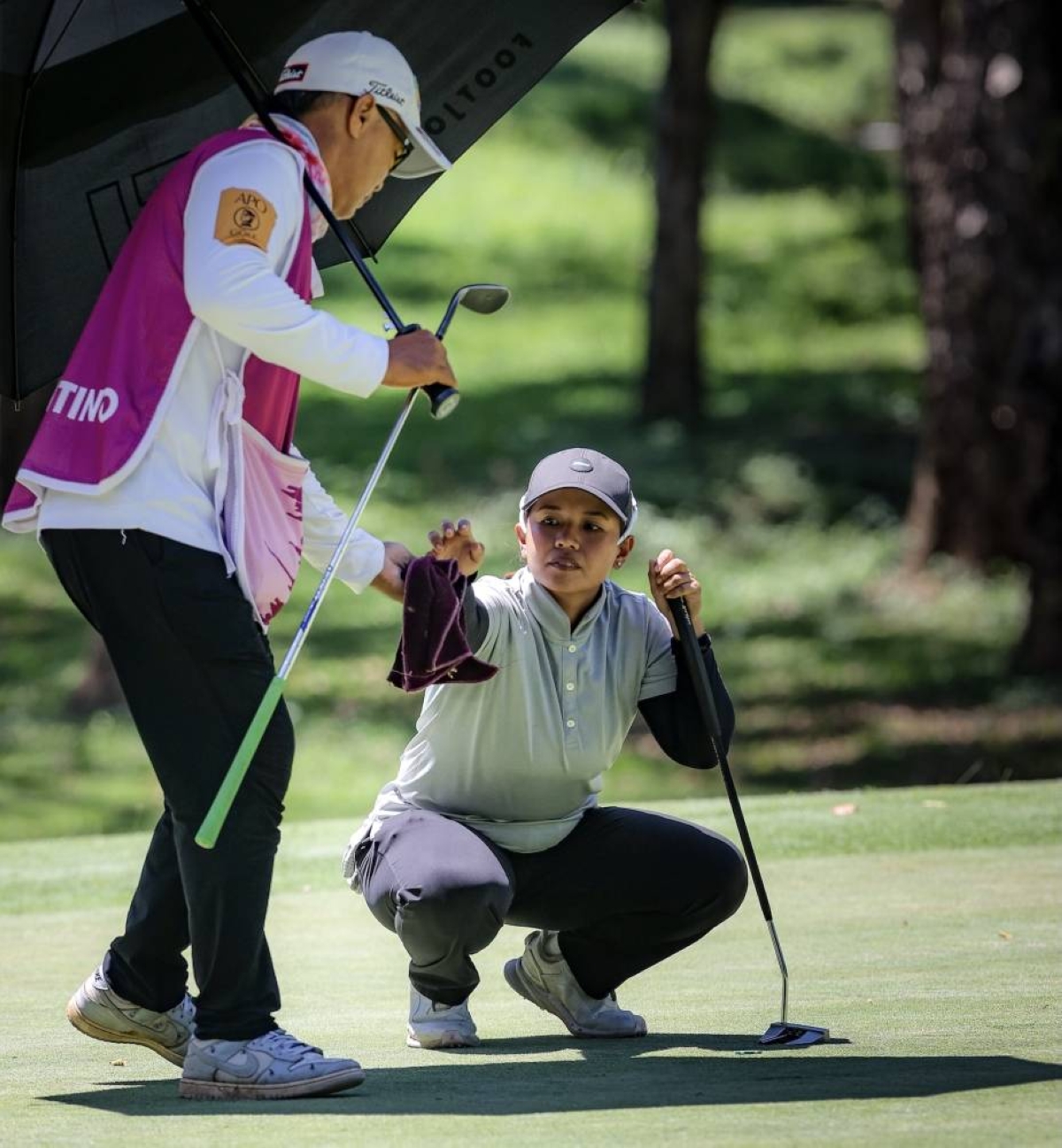
RUNNING low on motivation after an exhausting season that had taken her to nearly 20 tournaments, Harmie Constantino appeared to have little left in the tank. But when the final round demanded one last fight, the multi-titled campaigner found a fresh reserve of resolve — and turned a potentially wild, down-to-the-wire finish into a commanding two-shot triumph in the season-ending Ladies Philippine Golf Tour event in Davao City. Constantino overcame a two-shot deficit, shrugged off an early miscue and ignited her charge with a string of birdies, including three straight from No. 5. What initially shaped up as a volatile duel for the crown gradually tilted in her favor as she stayed patient, kept her shots under control, and watched her chief rival falter under pressure. She closed with a 69 for a 54-hole total of 213, capping a stirring comeback that belied her recent admission that the grind of a long campaign had drained her motivation. By the finish, she had transformed a tight leaderboard battle into a two-shot victory over Korean Kim Seoyun, who faltered with a 73 and a 215. The turnaround was all the more striking given how the final round began. Kim, tied with Chanelle Avaricio after 36 holes, initially seized control despite opening with two bogeys, answering with three consecutive birdies from No. 6. Avaricio, meanwhile, stumbled with three bogeys on the front nine and never recovered. Avaricio faded with a 76 and dropped to joint third at 218 with Yvon Bisera and Princess Superal, who shot 71 and 74, respectively. Constantino, playing in a separate flight, began to make her move with her birdie run from No. 5. As the contenders traded blows, the prospect of a dramatic finish remained very much alive. But the complexion of the championship changed on the back nine, where Constantino's steady play contrasted sharply with Kim's unraveling challenge. Kim bogeyed three of the first four holes coming home, opening the door for Constantino to stretch her lead to as many as three strokes. The Korean managed a birdie on the final hole, but it was too little, too late to prevent Constantino from securing the title. For Constantino, the victory was less about a sudden swing change than a decision to trust her game and resist the temptation to force the issue. "I think it's a hard question," she said when asked how she had summoned the energy to contend after admitting she was exhausted and had run out of motivation following a season of close to 20 tournaments. "I think I just tried to fight through it. I saw that I was hitting it well and I had a good chance. So, I just kept trying to fight through it," she said. Asked what had changed to help her rediscover her form, Constantino pointed not to a major adjustment but to patience and discipline.

YOUR NEWS, OUR NETWORK.

Do you have Great News you want to tell the world?

Be it updates about your business or your community, you can make sure that it’s heard by submitting your story to our network reaching hundreds of news sites across 6 verticals.